
Money explainer
How to track variable bills in a recurring calendar
Utilities and credit cards don't bill the same amount — here's a clean way to plan anyway.
Stitch Money Editorial Team · Published March 5, 2026
Editorial policy and correction standards
- Track variable bills without pretending the amount is fixed
- Use expected ranges and timing to plan more realistically
- Avoid false confidence from exact-looking numbers that aren't dependable
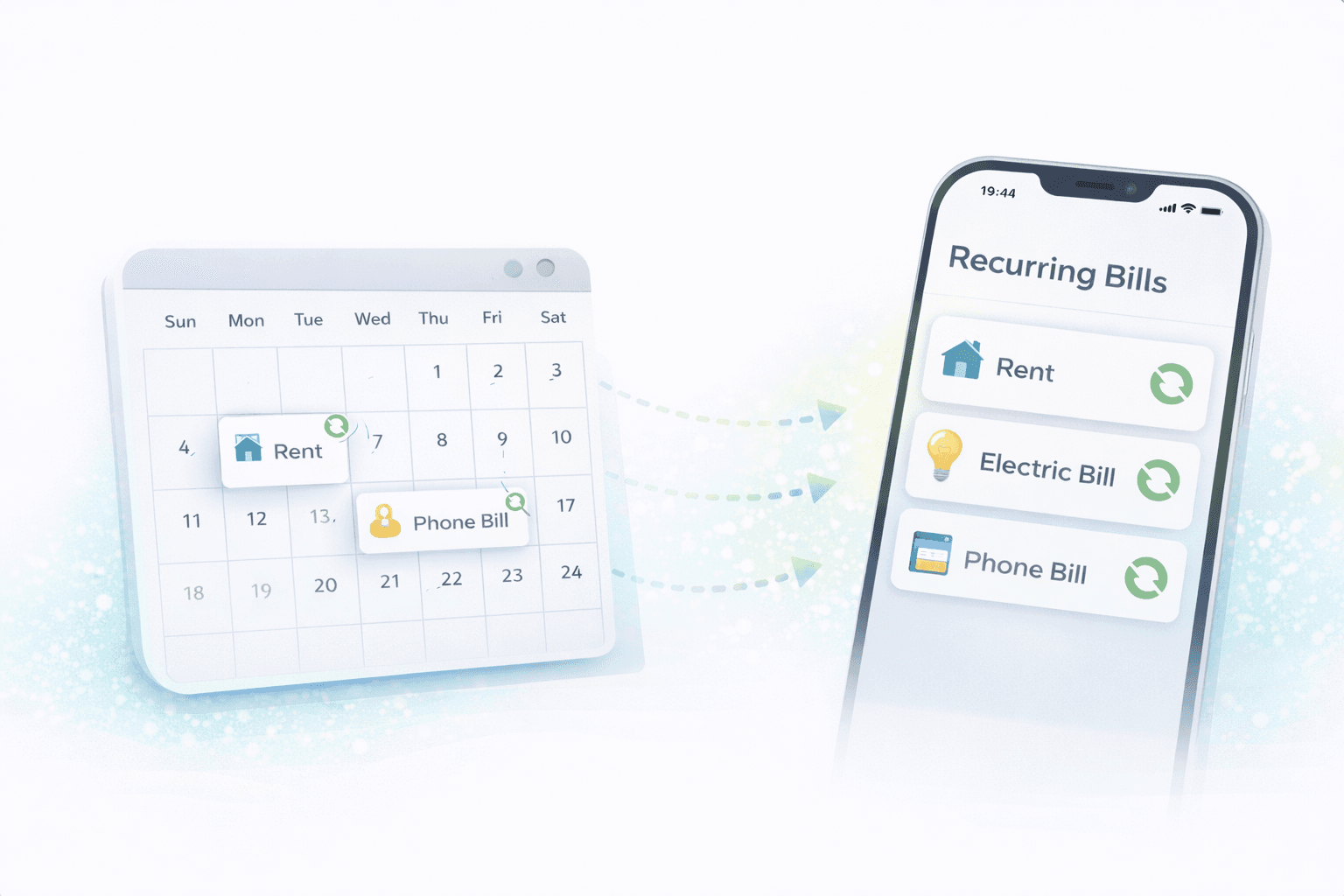
Variable bills belong in your recurring calendar even when the amount changes. The mistake is expecting the calendar to be exact when the bill itself isn't exact. A cleaner approach is to plan around timing plus a realistic range.
That's how utilities, credit cards, and seasonal bills become manageable. You don't need a perfect prediction. You need enough accuracy to avoid being surprised when the higher month shows up.
Why variable bills still belong in the calendar
A bill can be variable in amount and still recurring in timing. Electric, gas, water, and card payments all follow patterns that matter for planning even when the exact number moves around.
If you leave them out because they aren't fixed, the calendar becomes falsely calm and stops doing its most useful job: showing what's likely to hit next.
Use an expected range instead of a fake exact number
A range is often more honest than a single amount. If the electric bill usually runs between $110 and $185 depending on season, that's more helpful than pretending it will be exactly $134 because that was last month.
The same is true for credit card bills. The due date is recurring, but the balance depends on prior spending and statement timing.
Seasonality and card cycles change the feel of the month
Variable bills aren't random. Many of them have ranges shaped by weather, usage, or statement cycles. Recognizing the pattern is what makes planning realistic instead of reactive.
That's why the goal isn't precision theatre. It's knowing whether the next bill is likely to behave like the low side, the middle, or the high side of its usual range.
How to avoid overconfidence in exact totals
Exact-looking numbers feel reassuring, but they can create false confidence if the bill has real variability. A range plus a buffer is usually more honest than one precise-looking line item.
The best calendar keeps the timing visible, the expected range realistic, and the decision tied to the week rather than to a fake sense of certainty.
How to plan variable bills in a recurring calendar
- Keep the due date in the recurring view even if the amount changes month to month.
- Use a normal range based on recent history instead of forcing one exact number.
- Plan around the higher side of the range during known seasonal peaks or high-spend card months.
- Treat the final exact amount as confirmation later, not as the only way to plan ahead.
Helpful next reads
Two variable-bill patterns that reward range-based planning
Example 1: Seasonal electric bill swings
A household's electric bill usually sits between $112 and $138 in spring, then climbs into the $165 to $210 range during peak summer heat. Planning the July bill as '$118 because that was April' creates false calm.
The range makes the bill feel predictable enough to plan for without pretending the season doesn't matter.
Example 2: Credit card bill with a wide monthly spread
A card minimum is always due around the 23rd, but the actual statement balance can range from $420 to $980 depending on travel and family spending that cycle. The due date belongs in the recurring calendar even when the final amount isn't fixed.
Timing plus range is more useful than dropping the bill entirely because it's not exact.
Common mistakes with variable recurring bills
- Leaving a bill out of the recurring calendar entirely because the amount changes from month to month.
- Using one exact past amount as if it will be reliable during a season or statement cycle that behaves differently.
Pro tips for steadier planning
- Plan from the top half of the normal range when you know a seasonal or high-spend period is coming.
- Let the calendar answer timing first and the final bill statement answer precision later.
How Stitch helps you plan around variable bills without false precision
Stitch keeps recurring bills and upcoming timing visible so variable bills still stay in the planning workflow even when the exact amount changes. That makes it easier to prepare for the week without pretending the utility or card number is fixed.
Because the recurring list connects to transactions and cash flow, you can compare the current statement or recent pattern against the due date and make a more realistic short-term plan.
Frequently asked questions
Should variable bills still be tracked as recurring?
Yes. The due date and the repeating pattern still matter even when the exact amount changes.
How should I estimate a variable bill?
A range based on recent normal behavior is usually more honest than a single exact number.
What about seasonal utilities?
Seasonal utilities should be planned on the higher side of their normal range during peak months rather than using a mild-weather average.
Can credit cards be treated as variable recurring bills?
Yes. The due date is recurring even though the balance itself changes with spending and statement timing.
Why are exact numbers risky here?
Because they create false confidence. A variable bill that looks exact on paper can still land materially higher in real life.
How does Stitch help?
Stitch keeps variable recurring bills visible in the planning workflow so you can use timing plus recent history instead of pretending the amount is perfectly fixed.