
Comparison
If you want a Monarch Money alternative, start with the kind of household workflow you actually need
Stitch is built around shared household workflows, recurring bills, and practical review. Monarch Money may fit better if you want an established paid planning suite with collaboration built into a single subscription.
Stitch Money Editorial Team · Published February 26, 2026
Editorial policy and correction standards
- Fair comparison built around household workflows and public product details
- Focus on shared visibility, recurring bills, reports, and pricing style
- Choose the tool that fits your planning style, not just the feature list
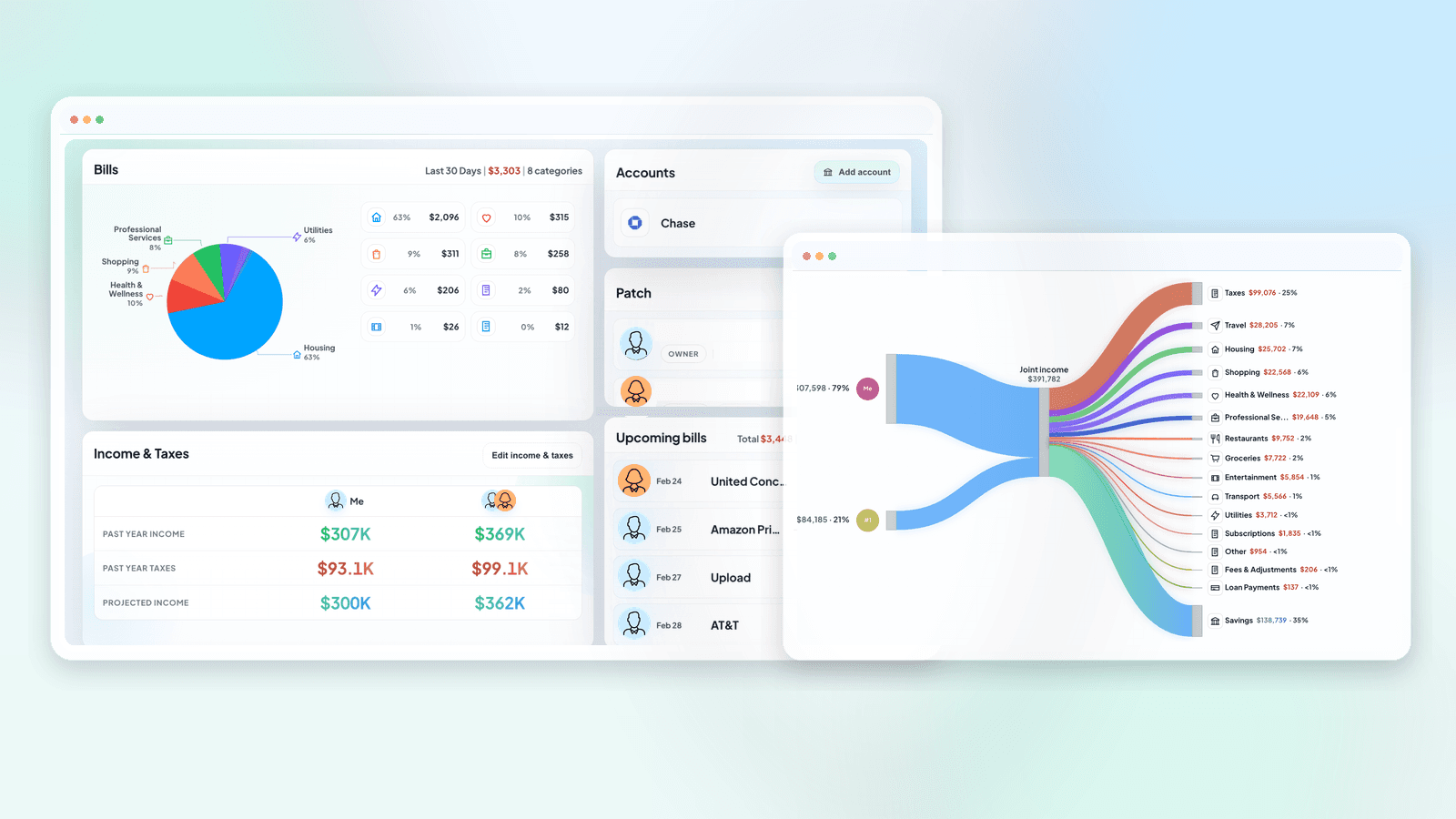
People searching for a Monarch Money alternative are usually looking for one of two things: a different price structure, or a different workflow for shared household money. The right alternative depends on whether your main pain is planning, recurring visibility, or household collaboration.
Stitch is designed for households that want shared transaction review, recurring bills, and cash flow context in a lighter-weight setup. Monarch Money may fit better if you want a full paid subscription with broad planning features and built-in collaboration from day one.
Where the day-to-day workflow feels different
Stitch leans into shared household operations: Patch, recurring bills, transaction review, and visual money flow that's easy to discuss in a quick check-in. The emphasis is on practical coordination, especially when more than one person influences the same bills.
Monarch Money's public positioning emphasizes a full personal finance platform with budgeting, investing visibility, subscriptions, reporting, and collaborative planning. For some households that broader all-in-one planning angle is the draw.
How to choose between them
If you want a free starting point, recurring bill visibility, and a household-first workflow, Stitch is the more natural fit. If you already know you want a paid planning app and prefer that style of all-in-one subscription immediately, Monarch may be closer to what you want.
The key isn't picking the app with the longest feature list. It's picking the one whose daily review model matches how your household actually makes decisions.
How to compare a budgeting app fairly
- Decide whether your main need is household coordination, broad planning, or investment visibility.
- Check how each product handles recurring bills, shared access, and the review workflow.
- Compare pricing style first so you know the real starting cost.
- Choose the app whose daily workflow matches the way you already manage money.
Helpful next reads
Two shoppers who should choose differently
Example 1: Household with recurring-bill stress
A couple wants one shared place to review bills, transaction changes, and household cash flow each Sunday. They care more about due dates and who paid what than about a broad planning suite.
A household-first workflow like Stitch is the cleaner fit for the decision they make every week.
Example 2: Planner who wants a paid all-in-one subscription
A user already expects to pay for a finance platform and wants budgeting, subscriptions, reporting, and collaboration as part of one paid product. They are comfortable with the subscription model and want that broader planning feel.
Monarch may be the better fit if that product style matches how they prefer to manage money.
Common mistakes in alternative-page shopping
- Comparing feature lists without asking which workflow you will actually open each week.
- Choosing based only on price headlines without checking whether the household collaboration style matches your real needs.
Pro tips for a fair comparison
- Start with your biggest pain point: shared household coordination, recurring bills, or broader planning depth.
- Use the comparison table as a filter, then choose based on the day-to-day review flow you are most likely to maintain.
How Stitch positions itself in this comparison
Stitch is focused on connected transaction review, recurring bills, household collaboration through Patch, visual reporting, and a free starting point that can grow into Premium features like net worth. It's intentionally built around the weekly money workflow, not just feature breadth.
That makes it a strong fit when your household wants shared visibility and practical money coordination without assuming a paid-only starting point.
Frequently asked questions
Is Stitch trying to be identical to Monarch Money?
No. Stitch is positioned around shared household workflows, recurring bills, and practical review. Monarch Money is positioned as a broader paid planning platform.
Which app is better for couples?
It depends on what the couple needs. Stitch is a strong fit for shared household coordination, while Monarch may fit households that want a paid planning suite with collaboration built in.
Does Stitch have net worth tracking?
Yes. Net worth tracking is available as a Premium feature in Stitch.
Is Monarch Money free?
Monarch Money publicly markets a paid subscription with a free trial period, so it's best evaluated as a paid product.
What should I compare first?
Start with pricing style, household collaboration, and how each product handles recurring bills and weekly review.
Why does workflow matter more than feature count?
Because the app you keep opening is the one that matches your real money routine. A longer feature list is less useful if the daily workflow doesn't fit.