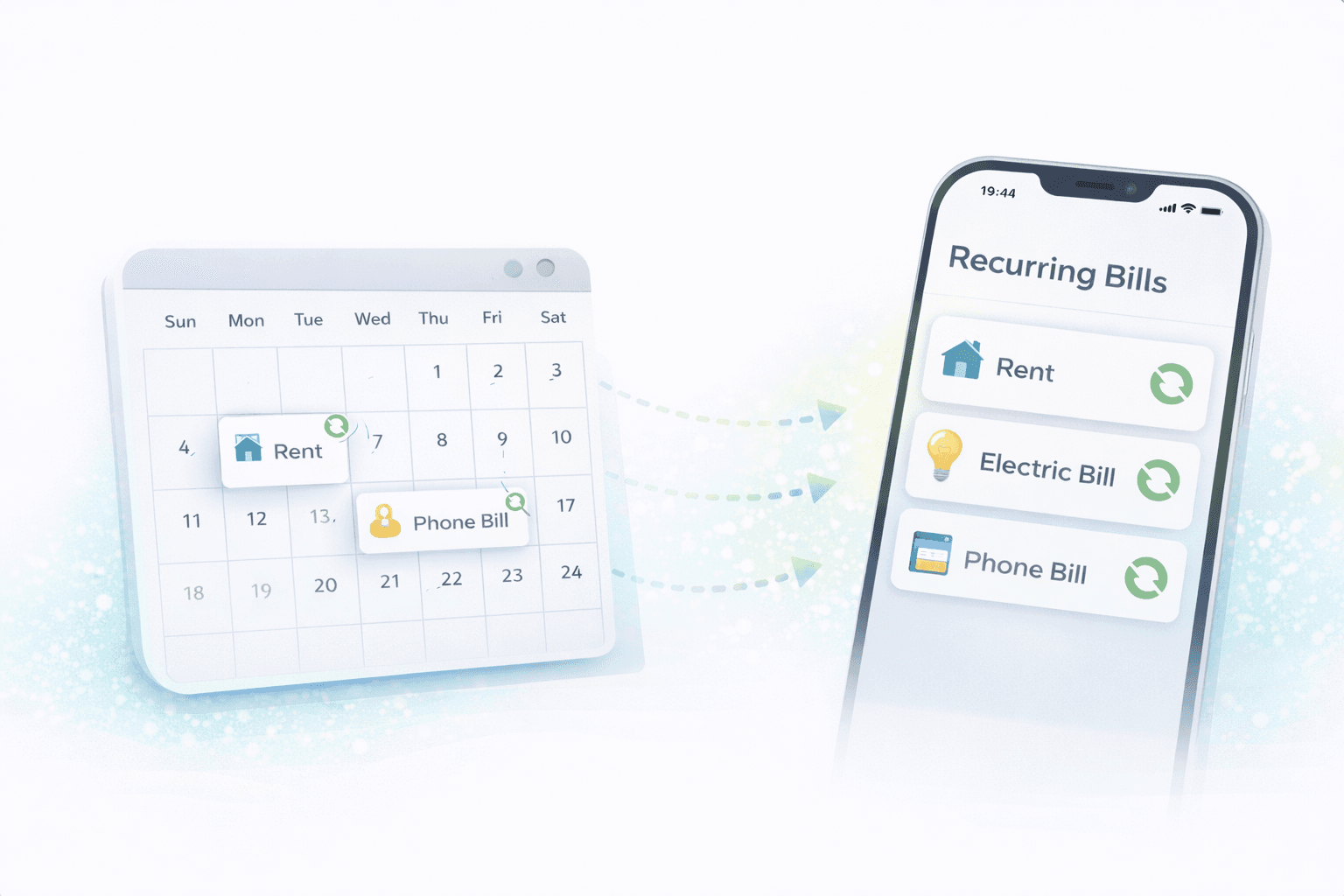
Bill planning

Use a bills calendar so due dates stop sneaking up on your paycheck

A bills calendar is useful when it shows the next week clearly, not just the whole month vaguely. Stitch keeps upcoming drafts visible in both list and calendar planning.

  • See what's due soon instead of reconstructing due dates manually
  • Compare list view and calendar view depending on the week
  • Spot clusters of bills before they squeeze your cash buffer
Stitch Money bills calendar showing upcoming due dates by day
A bills calendar is most useful when it highlights the next pinch point, not just the whole month.

Upcoming

See the next week clearly

  • Tuesday: Internet $82
  • Wednesday: Insurance $143
  • Friday: Card minimum $96

People usually look for a bills calendar because remembering due dates in your head stops working after a few recurring charges stack up. A list of bills is helpful, but a calendar becomes more powerful when timing is the real risk.

The goal isn't a pretty month grid. The goal is knowing which three bills hit before the next paycheck and whether that timing creates a decision you need to make now.

When a list is enough and when a calendar is better

A simple upcoming list works when you want the next few charges in order. A calendar view becomes more useful when multiple bills cluster around weekends, payday gaps, or seasonal swings in variable bills.

The best workflow often uses both. The list gives you the sequence, and the calendar helps you understand where the pressure point sits in the week.

Why planning ahead matters more than bill memory

Late fees rarely happen because people have never heard of a bill. They happen because a draft lands in a tighter-than-expected window. A calendar makes that window visible before it becomes a problem.

Seeing the timing also helps with ordinary choices, like delaying a big discretionary purchase by four days because two utilities and a credit card payment all land first.

How to use a bills calendar well

  1. Review the next seven to ten days before you review the entire month.
  2. Watch for clusters where two or three bills land before the next paycheck.
  3. Keep variable recurring bills on the calendar even when the amount changes.
  4. Use the calendar to decide timing, not just to admire a complete bill list.

Two calendar moments that change the week

Example 1: The midweek bill cluster

Internet drafts Tuesday for $82, car insurance hits Wednesday for $143, and the credit card minimum posts Friday for $96. The next paycheck isn't until Monday, so seeing that sequence on Sunday creates room to hold back a planned $110 dinner out.

The calendar protects the buffer before the bills land, not after.

Example 2: Variable utilities on a short month

Water and electric both land in the same final week of February, with the electric bill rising from $131 to $168. Because the calendar view shows both against the last paycheck, the household moves a transfer two days earlier.

A calendar makes variable bills easier to absorb without surprise.

Common bills-calendar mistakes

  • Using a monthly calendar but never zooming in on the next seven days, where most real decisions happen.
  • Dropping variable bills from the calendar because the amount isn't fixed, even though the timing still matters.

Pro tips for planning ahead

  • Treat the calendar like a forecasting tool, not a historical record; the point is to adjust before a bill hits.
  • Pair a calendar view with a simple upcoming list so you can see both sequence and weekly pressure at the same time.

How Stitch turns due dates into planning, not panic

Stitch brings recurring bills into one place, highlights upcoming timing, and gives households a faster way to see what lands next. That makes it easier to compare a bill cluster with your current spending and cash flow before the week gets busy.

Because the calendar ties back to the recurring and transaction views, you can go from 'what's due' to 'what changed' without switching tools.

A bill calendar works best when the source data stays current

Households rely on a bills calendar for real planning, which means stale data isn't good enough. Stitch uses connected account context to keep recurring timing useful while still respecting privacy and shared-account boundaries.

Frequently asked questions

What should a bills calendar show?

It should show the upcoming bill, expected timing, and enough context to compare that due date with your next paycheck or cash buffer.

Is a list better than a calendar for bills?

A list is faster for sequence. A calendar is better for spotting clusters and tight windows. Most people benefit from using both.

Should variable utilities stay on the calendar?

Yes. Even if the amount changes, the timing still affects planning and cash flow.

How far ahead should I look?

Start with the next seven to ten days. That window usually drives the most practical decisions.

Can a bills calendar help with shared household planning?

Yes. A shared calendar view makes it easier for everyone to see the same due-date pressure without passing screenshots around.

Why do bill clusters feel worse than the total amount?

Because timing creates stress. Several medium bills landing together can strain the buffer more than one larger bill spaced further out.

Get started

Plan around due dates before the pressure builds

Create a free Stitch account to see your upcoming bills in one place and catch the tight weeks earlier.