Household money

See household finances in one view without losing the personal context

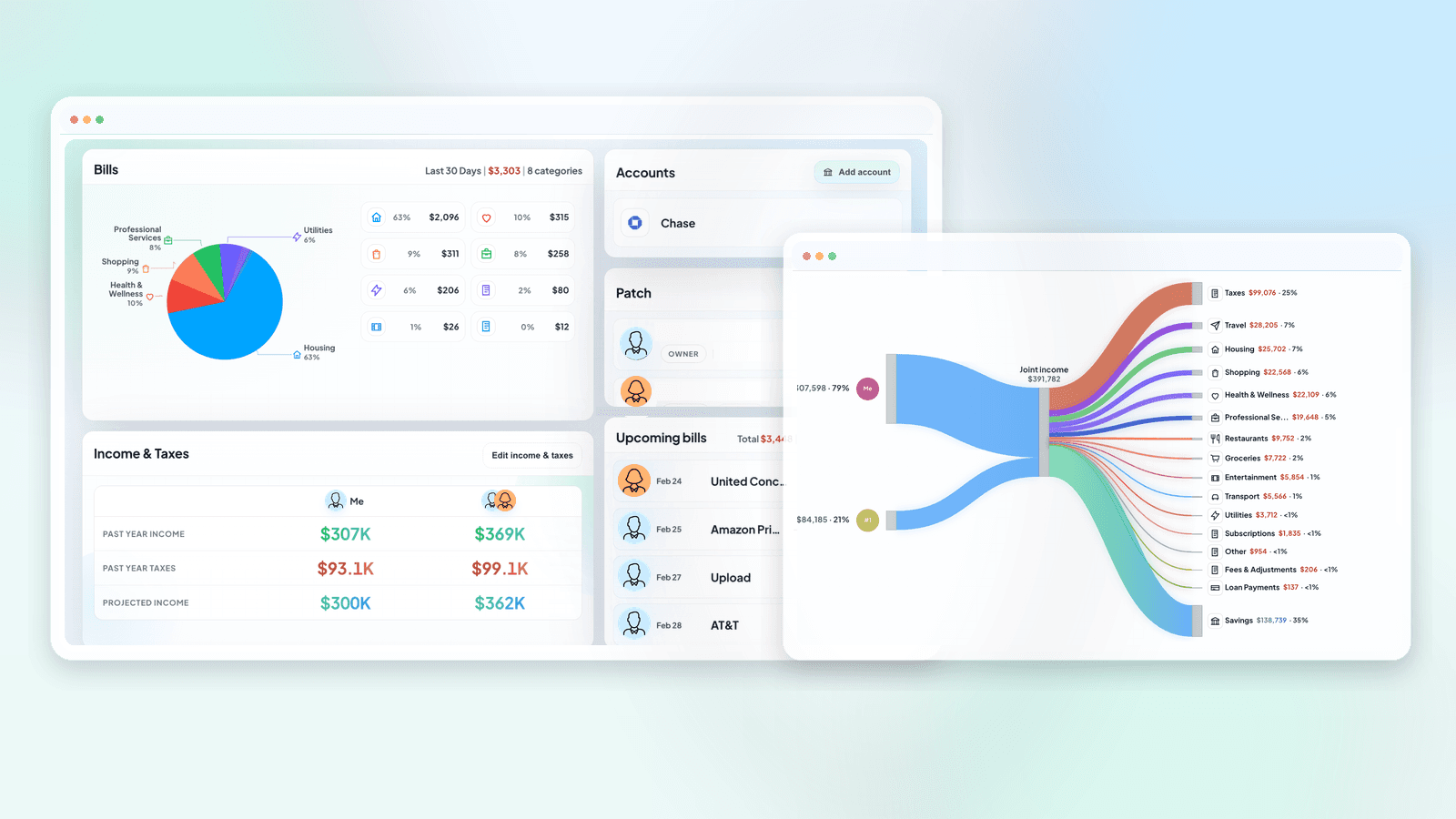
Stitch gives your household a shared dashboard for bills, spending, and cash flow while still keeping the yours, mine, and ours details readable.

  • Shared dashboard for household totals and upcoming bills
  • Personal context when a transaction belongs to one member
  • Built for weekly collaboration instead of spreadsheet handoffs
Stitch Money household dashboard showing shared spending and combined cash flow
A shared household view should answer what changed this week before anyone opens a spreadsheet.

Weekly view

Shared dashboard, personal context

  • Rent: $1,850 already paid
  • Utilities due in 4 days: $126
  • New personal-only charges flagged for review

Most households don't need one giant shared checking account. They need one place to see what happened, what's due next, and who should care about it. That's the gap between a bank app and real household money management.

A practical household finance setup starts with a combined transaction view, simple ownership context, and a routine that doesn't require both people to be free at the same moment. Stitch uses Patch so you can review shared spending together while still keeping personal purchases understandable.

What a usable household money system needs first

When people search for household finances, they usually want fewer surprises. That means one running view of transactions, recurring bills, and monthly cash flow instead of four apps, two logins, and a text thread that gets stale by Wednesday.

The second requirement is context. A grocery run for everyone shouldn't look the same as one person's dentist bill. Shared totals are useful only when you can still trace where the money came from and whether it belongs in the household conversation.

Why shared money discussions go sideways

Households often overcorrect. They either merge everything and lose boundaries, or they keep everything separate and spend half the month asking who paid for what. Both approaches create friction because neither gives you a clean review workflow.

A better pattern is a standing ten-minute review: scan new transactions, confirm recurring charges, and note anything large enough to affect the next paycheck. The shared dashboard matters because it shortens that review from a detective project to a quick conversation.

How to set up a household finance view in Stitch

  1. Create a Patch so each household member can connect the accounts they actually use.
  2. Label big recurring bills first so rent, childcare, utilities, and insurance are visible early.
  3. Review the latest week of transactions and tag anything that should stay personal.
  4. Use the shared totals as the meeting point, then drill down only when a category changes.

Two real ways this plays out

Example 1: One rent payment, two incomes, three cards

Mia pays the $1,850 rent from her checking account on the 1st, Jordan covers a $126 electric bill on the 5th, and groceries land across two credit cards during the month. A combined view lets them see the $2,400 shared spend total without pretending every charge belongs to both people equally.

They can settle once per week instead of reconciling line by line on the last day of the month.

Example 2: Family planning before a tight pay cycle

The second paycheck of the month lands on Friday, but daycare drafts $640 on Wednesday and the car insurance renewal hits Monday. Seeing the household timeline five days earlier lets the family delay a discretionary $180 home order instead of dipping below the buffer.

The decision happens before the charge clears, which is when the dashboard is most valuable.

Common mistakes that make household finances harder

  • Treating shared totals as enough context, then arguing later because no one can tell whether a charge was household or personal.
  • Waiting for month-end to review spending, which turns a short check-in into a backlog of forty decisions.

Pro tips for cleaner household reviews

  • Start with the largest four recurring bills first; small edge cases matter less than the payments that shape your cash cushion.
  • Use one recurring weekly review time even if only one person clicks around live; the shared view still gives both people the same reference point.

How Stitch keeps the household view practical

Stitch combines connected accounts into one transaction timeline, surfaces recurring bills, and makes it easier to review spending with member context instead of vague totals. Patch is built for households that need collaboration, not just a solo budget template.

Because the workflow starts with transactions and bill timing, the conversation stays grounded. You can scan what changed, see what's coming up, and decide what needs action before the next draft or payday.

Privacy and trust still matter in a shared dashboard

Household visibility should reduce confusion, not erase boundaries. Stitch is built around connected accounts, clear member context, and privacy controls so you can collaborate without forcing every financial detail into one shared bank account.

Frequently asked questions

Is household finance tracking the same as joining bank accounts?

No. Many households keep separate accounts and simply need a shared money view. Stitch is designed for that setup, so visibility doesn't depend on opening a joint account.

Can I see both shared and personal spending?

Yes. The point isn't to flatten every transaction into one bucket. You should be able to review what affects the household and still recognize when a purchase belongs to one person.

What should we review together each week?

Start with new transactions, upcoming recurring bills, and any category that moved more than expected. That covers most useful decisions in under ten minutes.

Does this only work for couples?

No. The same setup helps roommates, parents helping adult children, or any household where more than one person influences bills and spending.

What if one person is more involved than the other?

That's common. One person can do the day-to-day review while the shared dashboard keeps the summary visible enough for a faster check-in with everyone else.

Why not just use a shared spreadsheet?

Spreadsheets break down when transaction imports, recurring charges, and current balances all live somewhere else. A shared finance app removes the manual copy step.

Get started

Bring the household conversation into one place

Create a free Stitch account, start a Patch, and get one clear view of spending, bills, and household cash flow.