
Privacy-first sharing
Share finances safely by deciding what's visible before anything gets connected
Safe financial sharing starts with permission boundaries, a clear list of shared categories, and a workflow that doesn't expose more than the household actually needs.
Stitch Money Editorial Team · Published February 26, 2026
Editorial policy and correction standards
- Decide what should be shared before linking accounts
- Use a permission mindset instead of an all-or-nothing mindset
- Keep the household informed without oversharing sensitive details
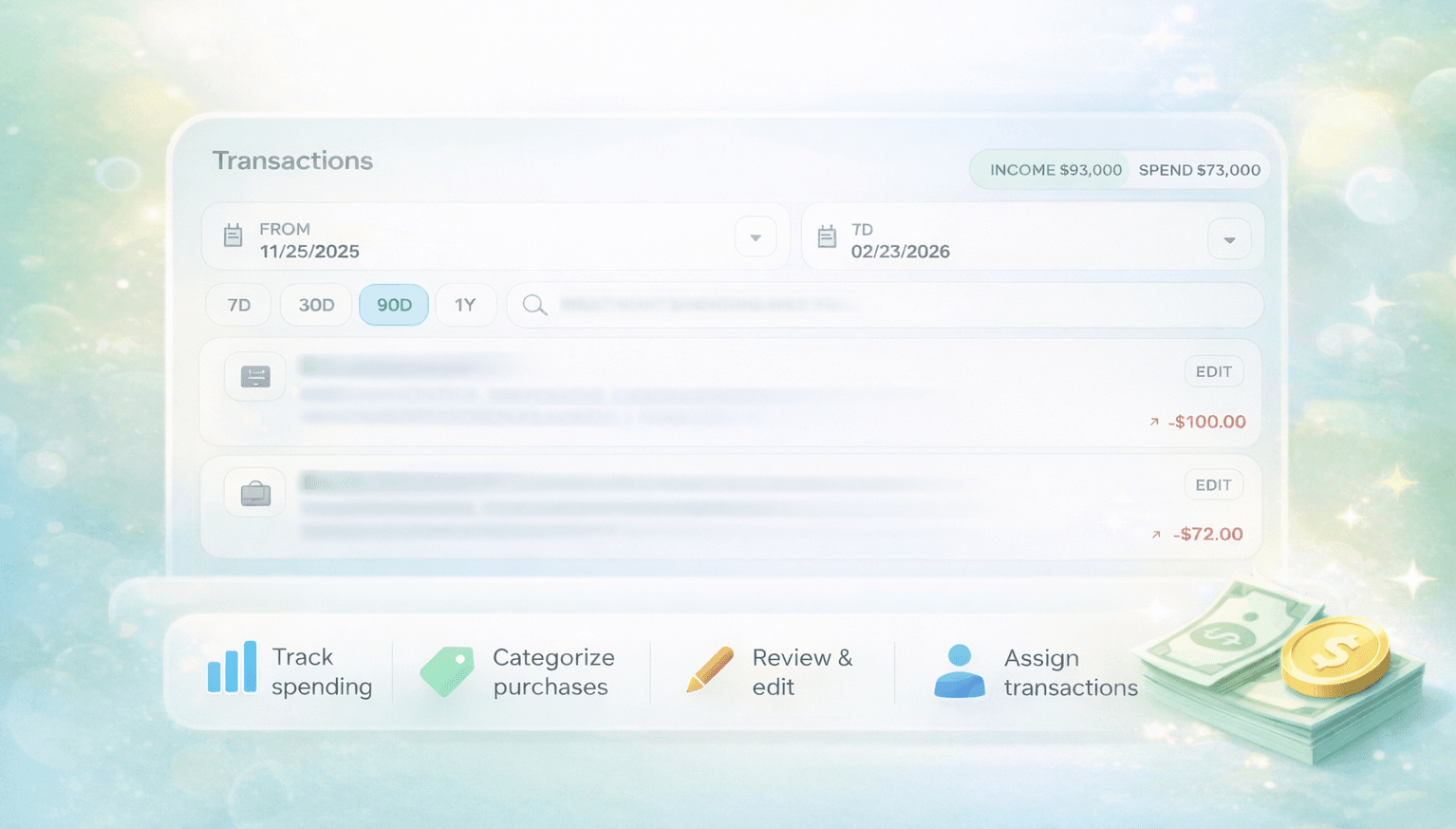
When people ask how to share finances safely, they are usually asking two questions at once: how do we stay on the same page, and how do we avoid losing privacy or control. That's a healthy instinct.
The safest setup isn't the one with the most data. It's the one where the household agrees on what should be visible, how it will be reviewed, and what stays outside the shared conversation unless both people decide otherwise.
Start with a permission list, not a product list
Before you connect anything, write down what belongs in shared view. For most households, that means recurring household bills, rent, groceries, childcare, and goal-related transfers. It doesn't automatically include every medical purchase, gift, or personal subscription.
This permission mindset is what makes financial sharing safer. It keeps the shared layer tied to purpose instead of letting convenience decide what everyone can see forever.
The practical red flags to watch for
Unsafe sharing usually looks like one person doing all the setup while the other person is unclear on what became visible. It can also show up when shared tools become a back door for monitoring rather than coordination.
A healthy workflow is boring in the best way: both people know what's being tracked, both know how the weekly review works, and neither person is surprised by the scope of visibility.
A safer way to share financial visibility
- List the categories that truly require shared review, then leave everything else out by default.
- Decide who needs access to the shared dashboard and who doesn't.
- Agree on a recurring review cadence so the tool is used for coordination, not surveillance.
- Revisit the visibility boundaries after major life changes, not just when a disagreement happens.
Helpful next reads
Two scenarios where safer sharing matters
Example 1: New couple moving in together
A couple is combining rent, utilities, and groceries but still keeping separate debt payoff plans. They share the $2,180 household obligations and upcoming due dates, while personal debt and gift spending stay outside the shared review.
They get practical visibility for the move without making every line item part of the household conversation.
Example 2: One partner managing family logistics
One partner handles the calendar and sees the $340 after-school program and the $96 utility auto-pay coming up, while the other still participates in the Sunday check-in. The shared tool supports planning instead of forcing one person to ask for screenshots.
The admin burden drops without creating an unspoken imbalance around information.
Common mistakes that make sharing feel unsafe
- Connecting everything first and trying to negotiate boundaries later, after the scope of visibility already changed.
- Using a shared finance tool to inspect personal behavior instead of staying focused on bills, goals, and household timing.
Pro tips for privacy-first collaboration
- Treat shared visibility as a household operating system, not a moral scoreboard; the review should stay tied to action items.
- Start with the smallest useful set of shared categories and widen it only if both people want more coordination.
How Stitch supports safer financial sharing
Stitch is built around practical household coordination: shared bills, transaction review, cash flow visibility, and Patch collaboration. The goal is to make the shared layer useful without forcing a fully merged financial life.
That's why the best use case is purpose-driven sharing. You can focus on what the household needs to manage and avoid turning the tool into a source of unnecessary exposure.
Frequently asked questions
What does sharing finances safely mean in practice?
It means deciding what should be visible, who should see it, and why it needs to be shared before you start connecting accounts or reviewing transactions together.
Should couples share every transaction?
Not automatically. Most households only need shared visibility for recurring bills, shared categories, and goal-related decisions.
Can a shared dashboard still respect privacy?
Yes. A shared dashboard is safest when it's scoped around household coordination and clear boundaries rather than defaulting to all-or-nothing visibility.
What should we agree on before linking accounts?
Agree on which bills and categories belong in shared view, how often you will review them, and what remains personal unless you both opt in.
How do we avoid money check-ins turning into arguments?
Keep the review short, focus on upcoming obligations and exceptions, and avoid turning the tool into a place to relitigate every discretionary purchase.
Is a joint account safer than a shared finance app?
They solve different problems. A joint account changes where money lives. A shared finance app changes how visible the household picture is.