
Budget model
Build a yours, mine, and ours budget that people can actually stick to
The mine, yours, and ours model works when shared bills are obvious, personal spending stays personal, and the handoff between those two is easy to review.
Stitch Money Editorial Team · Published February 26, 2026
Editorial policy and correction standards
- Separate personal spending from true household obligations
- Use Patch to review the shared layer together
- Reduce resentment caused by fuzzy reimbursement rules
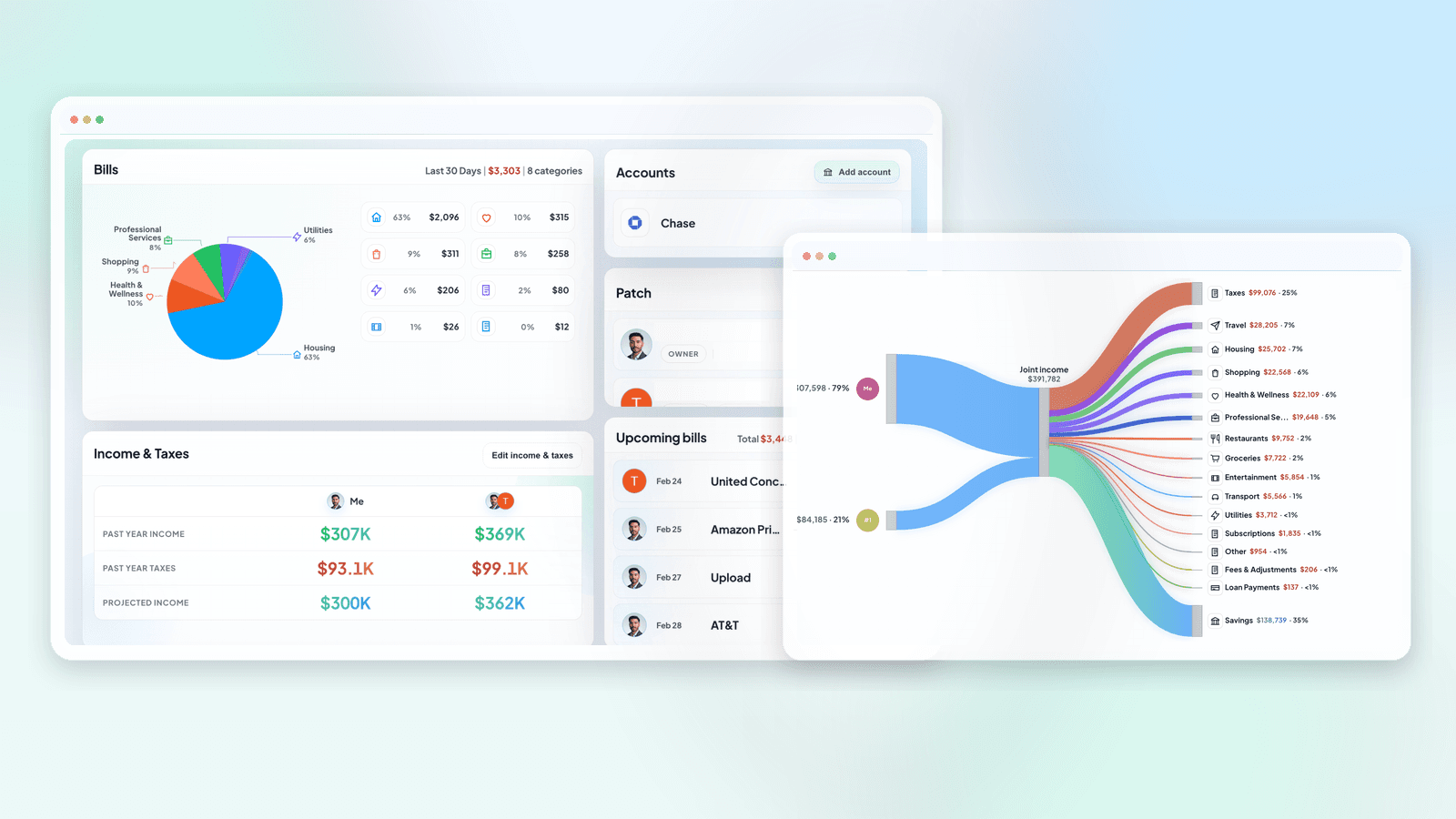
People search for a yours, mine, and ours budget when they want teamwork without fully merging every dollar. The model works because it matches how many couples already live: some bills are shared, some purchases are individual, and not every transaction deserves committee review.
The hard part isn't the concept. The hard part is keeping the boundaries visible after the month gets busy. Stitch gives you a practical Patch workflow so the shared bucket, the personal bucket, and the transfers between them are easier to track.
What belongs in each bucket
The shared bucket usually holds rent, utilities, groceries, childcare, insurance, and anything both people agreed to fund together. Personal buckets cover discretionary spending, personal debt payments, gifts, or hobby purchases that don't need a household vote.
The ours bucket should stay small enough to be obvious. If you put every line item into the shared category, the model stops creating clarity and turns into a joint-everything system under a different name.
How couples usually decide the split
Some households transfer the same dollar amount every payday into the shared bucket. Others use an income-weighted rule such as 60 percent and 40 percent. Either can work as long as the rule is written down and reviewed when income changes.
Where couples get stuck is timing. If transfers happen after the shared bills draft, the model feels broken even when the math is fine. A visible timeline matters as much as the split formula itself.
A simple yours, mine, and ours setup
- List every monthly bill and mark it as shared, personal, or mixed before you decide percentages.
- Choose one contribution rule for the shared bucket and write down when transfers happen.
- Track shared bills in one view so either person can confirm what already cleared.
- Review the split after raises, job changes, move-ins, or new childcare costs.
Helpful next reads
Two household setups that stay balanced
Example 1: Equal contribution with separate personal cards
Lena and Chris each move $1,400 into the household pool on the 1st and 15th. Shared costs average $2,650 per month, which leaves a $150 float for groceries that spike or a utility bill that runs high in July.
Their personal cards stay personal, but the shared bills never depend on memory.
Example 2: Income-weighted after a career change
After one partner moves from $5,800 take-home to $4,100 during a job switch, the household contribution changes to 58 percent and 42 percent. The couple keeps the same rent and daycare plan, but the rule shifts before the next month starts.
The model adapts without turning personal spending into a negotiation every week.
Common mistakes with the mine, yours, and ours model
- Calling a purchase shared after the fact because it feels unfair, even though no rule existed before the charge happened.
- Keeping the split formula in a note somewhere but not tying it to the actual bill calendar or transaction review.
Pro tips that keep the model from drifting
- Review only the ours bucket together first; personal spending can stay in the background unless it affects a shared goal.
- Use a small shared buffer so one odd utility month doesn't trigger a last-minute transfer request.
How Stitch supports the yours, mine, and ours model
Stitch lets households review shared spending in Patch while still keeping the transaction-level context that shows whether something belongs to one person or the whole household. That makes the model usable week after week, not just on paper.
With recurring bills, transaction review, and cash flow visibility in one place, you can check whether the shared bucket is healthy before the next set of drafts lands.
Frequently asked questions
What's a yours, mine, and ours budget?
It's a budgeting model where some money stays personal and a clearly defined portion covers shared bills and goals. The structure works best when the shared portion has visible rules and a regular review.
Is 50-50 the only fair way to do it?
No. Many couples use income-weighted or custom contribution rules. Fair usually means the rule fits your actual income and responsibilities, not that the percentages match perfectly.
Do couples still need a joint account for this?
Not necessarily. Plenty of households run the model with separate accounts plus a shared money tracker and a predictable contribution routine.
What if one person pays more shared bills directly?
That's workable as long as the transaction view still makes the difference visible. The problem isn't uneven payment paths; it's invisible payment paths.
How often should we revisit the split?
Revisit it whenever income changes materially or a major expense enters the household, and do a quick check every few months even if nothing dramatic changed.
Can this work for engaged couples or roommates?
Yes. The model helps whenever people share some obligations but still maintain separate financial identities.