
Expense splitting
Split household expenses with rules that stay fair after real life changes
A fair split is less about the perfect percentage and more about choosing a rule that matches income, recurring bills, and reimbursement timing.
Stitch Money Editorial Team · Published February 26, 2026
Editorial policy and correction standards
- Compare 50-50, income-weighted, and custom household splits
- Keep recurring bills visible so the split works in practice
- Reduce reimbursement confusion before it turns into resentment
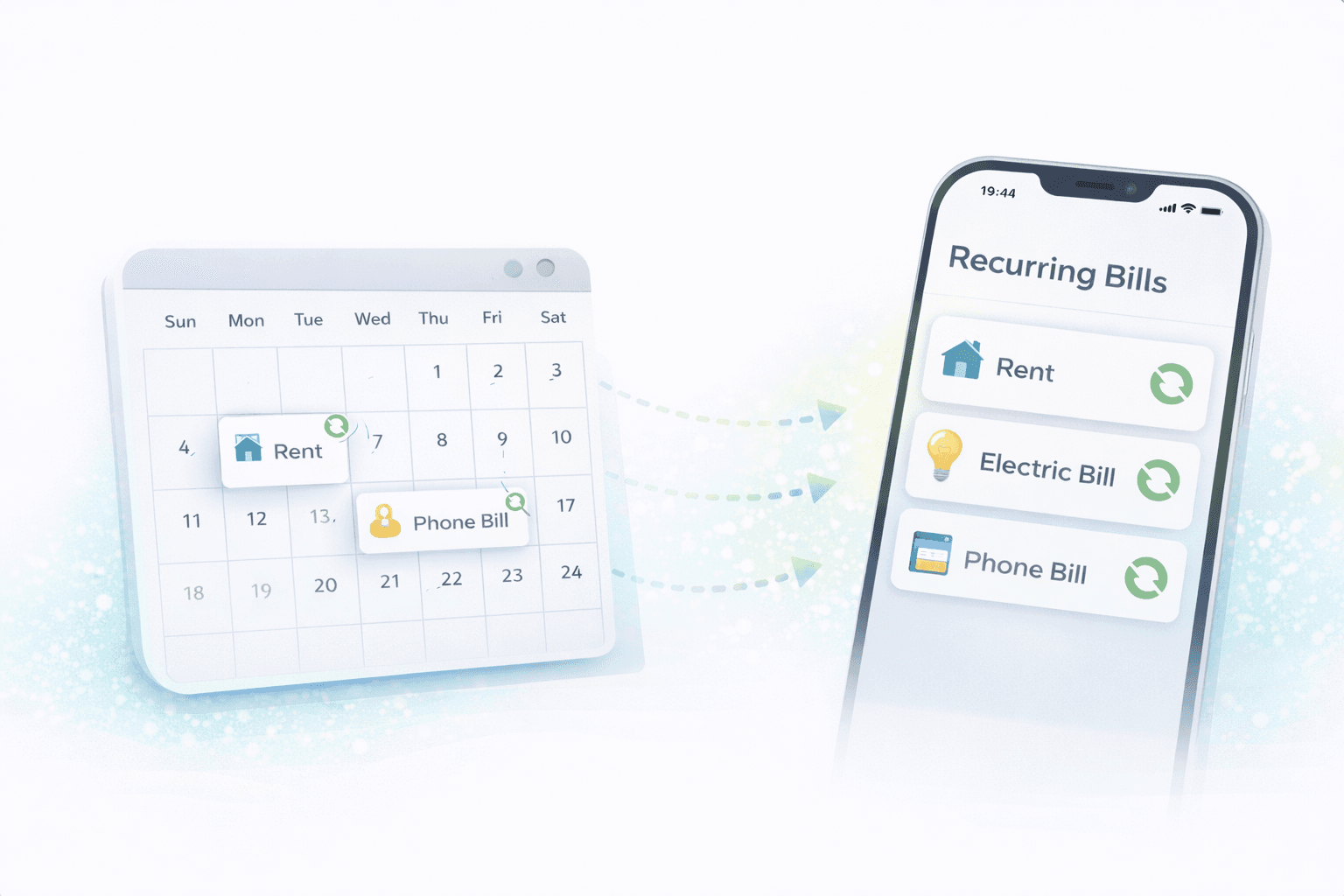
Splitting household expenses sounds simple until the bills hit on different days, one person gets a raise, or groceries keep landing on whichever card was easiest at checkout. The right split method needs to survive normal life, not just a spreadsheet exercise.
That's why most households choose between three approaches: straight 50-50, income-weighted, or a custom category-based split. Stitch helps you see which bills are recurring, what already cleared, and what still needs to be settled.
How the three common split methods behave
A 50-50 split is simple and fast, which makes it attractive for roommates or couples with similar take-home pay. Income-weighted splits are often better when one income is meaningfully higher or the risk of cash strain falls unevenly.
Custom splits work when certain categories are truly shared while others belong more to one person. They require slightly more setup, but they can reduce tension in households where one blunt percentage feels wrong.
Why timing matters as much as fairness
Households often focus on percentages and forget cash timing. A fair split still fails if one person's bills draft three days before payday while the other person settles at month-end.
Recurring bills, reimbursement timing, and a small shared buffer keep the split from breaking during normal fluctuations. The right method should feel manageable during an ordinary busy week, not only during a monthly planning session.
How to choose a household split
- List the recurring household bills and note who currently pays each one.
- Compare take-home income, bill timing, and any categories that should stay personal.
- Pick one rule: 50-50, income-weighted, or a custom category split.
- Review the rule after major income or housing changes so it doesn't drift out of date.
Helpful next reads
Two ways households split expenses in real life
Example 1: 50-50 with a shared buffer
Two roommates split $2,200 rent, $150 utilities, and about $320 in shared groceries evenly. They each contribute $1,400 on the 28th, leaving a $210 float so uneven grocery weeks don't require constant reimbursement messages.
The split is simple, and the small float keeps it from feeling brittle.
Example 2: Income-weighted after maternity leave
A couple's take-home pay changes from $4,900 and $4,600 to $4,900 and $2,900 for six months. Their shared bills total $3,780, so they shift from nearly even to a 63/37 contribution until both incomes stabilize again.
The bills stay covered without pretending their current incomes are equal.
Common mistakes when splitting household costs
- Using one percentage because it sounds fair, even though due dates and cash flow make the real burden lopsided.
- Recomputing reimbursements after every grocery run instead of choosing a stable rule and a regular settlement day.
Pro tips for smoother household splits
- Keep the split method simple enough to explain in one sentence; complexity often creates more tension than it solves.
- Review shared bills first, then fix category edge cases later; the big recurring obligations shape fairness more than occasional one-offs.
How Stitch supports fairer household splits
Stitch gives households one place to review recurring bills, recent transactions, and timing across accounts, which makes the chosen split easier to follow in practice. You can see what already cleared and what still needs coordination.
That visibility matters whether you split evenly or use a custom rule. The friction usually drops when no one has to reconstruct the month from memory first.
Frequently asked questions
Is 50-50 the best way to split household expenses?
It's the simplest way, but not always the best way. A 50-50 split works best when incomes and cash timing are reasonably similar.
When does an income-weighted split make more sense?
It usually makes more sense when one person carries a meaningfully larger share of take-home income or when life changes make a fixed equal split hard to sustain.
What's a custom split?
A custom split means certain categories or bills follow different rules instead of one universal percentage. It can be useful when some costs clearly benefit one person more than the other.
Should we reimburse after every purchase?
Usually no. Most households prefer a stable contribution or one regular reimbursement check rather than constant one-off transfers.
What if our incomes change mid-year?
Treat that as a reason to revisit the split rule. A method that was fair six months ago can become stressful after a raise, leave, or job change.
How do recurring bills affect the split?
Recurring bills create the baseline obligation every month. If those aren't visible, the split will feel inconsistent no matter how fair the percentage looks on paper.