
Separate accounts
Budget together without opening a joint account
You can run a household budget with separate accounts if the shared bills are visible, the split rule is clear, and the review routine is simple enough to repeat.
Stitch Money Editorial Team · Published February 26, 2026
Editorial policy and correction standards
- Keep separate banking relationships and login boundaries
- Track shared bills and reimbursements in one place
- Review the budget together without merging every dollar
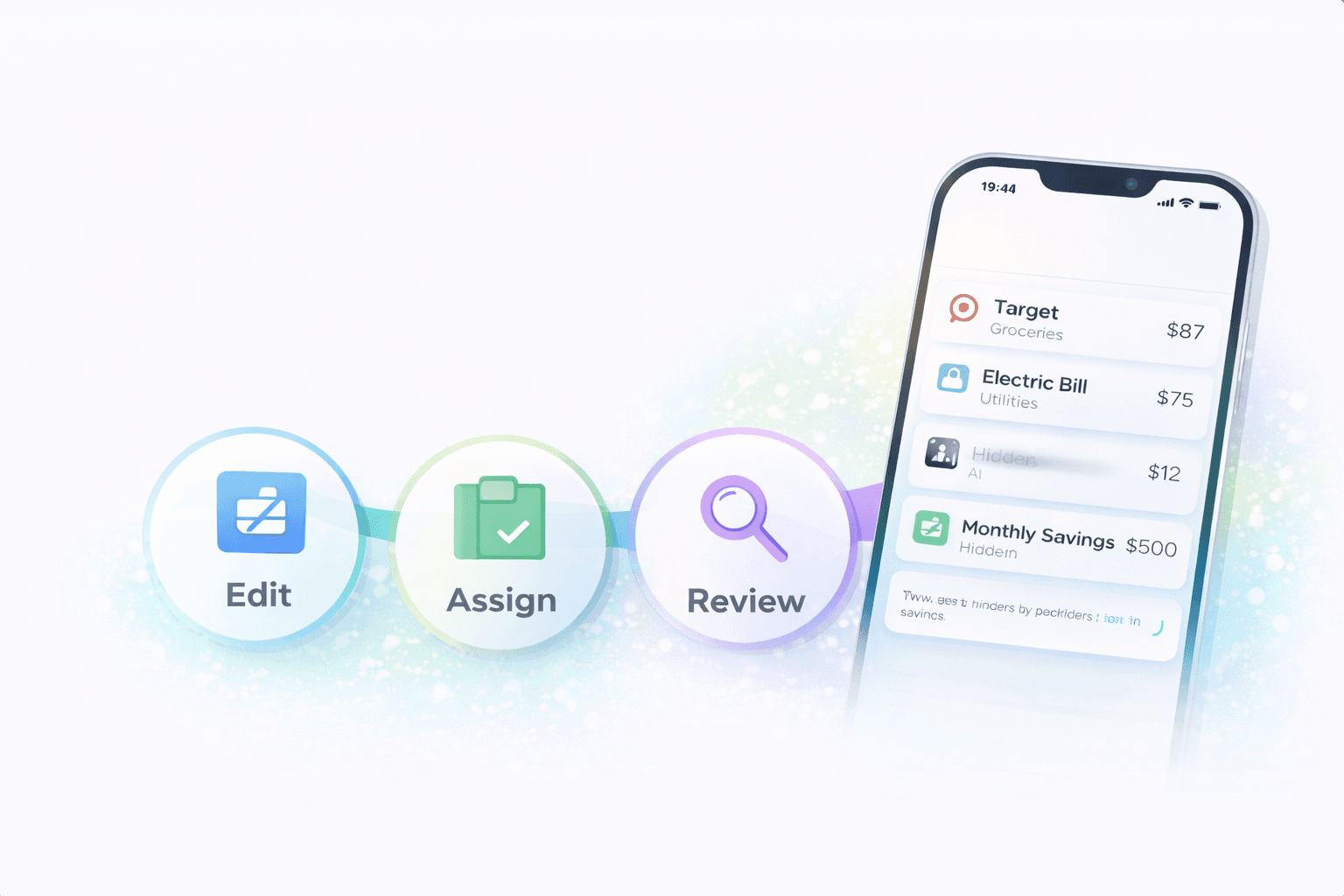
A lot of couples and households want a shared budget but don't want to open joint accounts. Sometimes it's a privacy preference. Sometimes it's a second marriage, a roommate setup, or just a simpler way to keep existing banking relationships intact.
The challenge isn't the separate accounts. The challenge is knowing what's shared, what's paid, and what still needs attention before a due date passes. Stitch is built for that middle ground.
Why separate accounts still work for joint planning
A household budget only needs a common source of truth. It doesn't require one shared bank ledger. When both people can see the spending, bill timing, and expected cash flow, separate accounts can be easier to manage than forcing a new joint structure.
This setup often reduces friction because each person keeps their own login, direct deposit, and personal purchases exactly where they already are. The shared process is about coordination, not account consolidation.
Where separate-account budgets usually break
The pain usually shows up in three places: hidden recurring bills, uneven reimbursements, and timing mismatches between paydays and drafts. Those are workflow problems, not proof that separate accounts can't work.
If the household only talks about money after something bounces or feels unfair, the system will always feel fragile. Visibility a few days earlier is what makes the setup reliable.
How to budget with separate accounts
- Mark which bills are shared before deciding who pays them in practice.
- Choose one reimbursement or contribution rule so the same debate doesn't repeat every month.
- Review new recurring charges and large transactions once per week.
- Keep a cash buffer for shared bills even when the payments come from different banks.
Helpful next reads
Two separate-account systems that stay organized
Example 1: Separate checking, shared bills by owner
Taylor keeps rent and internet in one account, while Robin handles groceries and utilities from another. Together they average $3,420 in shared monthly costs and settle the difference every Sunday instead of after each payment.
Each person keeps their own banking setup, but the budget still reflects the full household picture.
Example 2: Roommates splitting recurring household costs
Two roommates leave direct debits where they are: one pays the $84 Wi-Fi bill and the other covers the $61 streaming and cleaning supply plan. The shared tracker catches the new $19 water surcharge before anyone assumes the landlord rolled it into rent.
Separate accounts stay separate, while the shared obligations remain visible to both people.
Common mistakes with separate-account budgeting
- Assuming separate accounts mean each person should manually track only the bills they pay, which hides the true household total.
- Treating reimbursements as optional clean-up work instead of part of the budget design.
Pro tips for keeping boundaries and clarity
- Use shared visibility for obligations, not for every discretionary purchase; that keeps the review focused and lower stress.
- Anchor reimbursements to a fixed day, such as Sunday night or the day after payday, so no one has to chase the other person.
How Stitch supports shared budgeting with separate accounts
Stitch gives you a household-level view without requiring a joint account to exist first. You can connect the accounts you already use, surface recurring bills, and review transactions in one shared workflow.
That means fewer text-message reconciliations and fewer missed transfers. The budget can stay collaborative even when the money moves through separate bank accounts.
Frequently asked questions
Can you budget together without a joint account?
Yes. The key is having one shared view of bills, transactions, and timing. A joint account is one method, not a requirement.
What's the hardest part of separate-account budgeting?
Usually it's not the math. It's delayed visibility around recurring bills, reimbursements, and due dates that are spread across multiple institutions.
Should every shared purchase be reimbursed immediately?
No. Most households find it easier to settle on a schedule instead of sending tiny transfers throughout the week.
Does this only work for couples?
No. It also works for roommates, adult siblings, and other households that share bills but keep separate banking relationships.
How much of our budget should be reviewed together?
Review the part that affects shared obligations, the cash buffer, and major goals. Personal discretionary spending doesn't need the same level of shared attention.
What if one person handles most of the bills?
That's fine if the visibility still exists. The review shouldn't depend on one person remembering everything from memory.