Recurring tracking

Track recurring bills and subscriptions before they fade into the background

Recurring charges feel manageable until one changes amount, shifts timing, or multiplies across cards. Stitch helps you spot the pattern and review it quickly.

  • Surface repeating bills and subscriptions in one place
  • Keep due dates visible even when amounts vary
  • Review what still belongs in your budget before the next charge lands
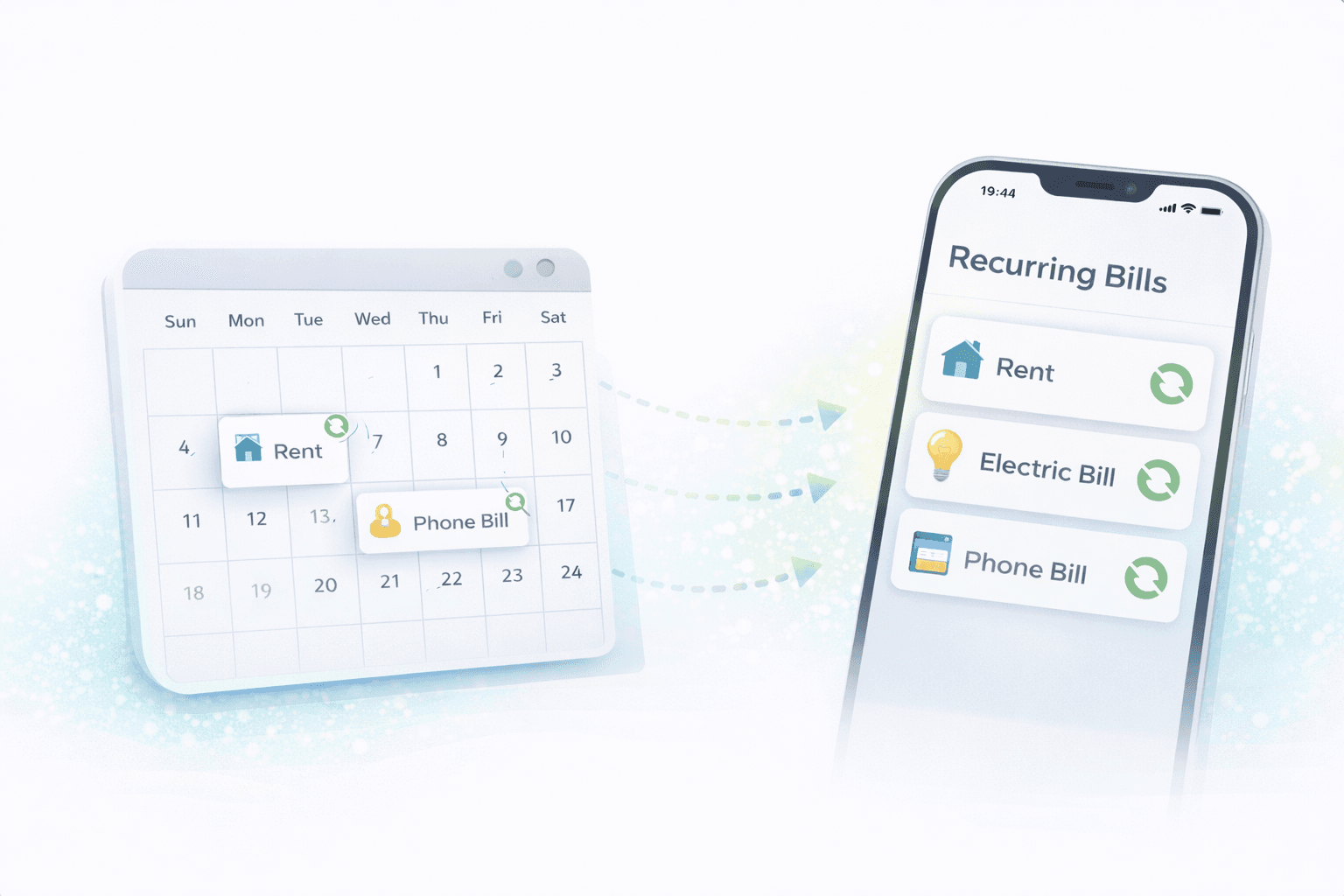
Stitch Money recurring bills view showing due dates and upcoming charges
Recurring tracking is most useful when it stays tied to due dates and a current review routine.

Recurring review

One place to spot repeat charges

  • Fixed bills and variable bills together
  • Upcoming due dates called out clearly
  • Subscriptions reviewed before the next draft

Recurring bills are easy to ignore because they look familiar. That's exactly why they cause trouble. A charge that hits every month can still drift in amount, move earlier than expected, or become unnecessary after a free trial quietly ends.

The fastest way to control recurring spending is to keep a current list with due dates, expected timing, and a simple review workflow. Stitch is built to make that list visible and actionable.

What counts as recurring and what needs a second look

Recurring spending includes obvious fixed bills such as rent, insurance, and internet, but it also includes variable charges that still follow a pattern: electric, gas, child care auto-pay, and app subscriptions with changing tax or usage.

That's why a recurring list shouldn't be treated like a static checklist. The amount can move while the rhythm stays the same, and the review should capture both pieces.

The easiest recurring-bill workflow to maintain

A strong workflow is simple: confirm the list, check what's due soon, and review whether each item still belongs in the household plan. That keeps the list tied to decisions instead of turning it into a passive archive.

Households that revisit recurring charges weekly tend to catch problems earlier than households that wait for the monthly statement. The goal is early notice, not perfect forecasting.

How to review recurring bills and subscriptions

  1. Scan the recurring list once per week, not only when the month turns over.
  2. Check both fixed bills and variable bills that still follow a repeat pattern.
  3. Flag any subscription that feels familiar but no longer clearly useful.
  4. Confirm upcoming drafts against the next paycheck or available cash buffer.

Two recurring-charge patterns worth catching early

Example 1: Variable bill, same monthly risk

The electric bill jumps from $118 in April to $176 in July while still drafting on the 12th. Even though the amount changes, the household still needs the reminder because that draft lands two days before a smaller paycheck.

Pattern visibility matters more than a perfectly fixed number.

Example 2: Subscription stack across two cards

A household finds $14.99, $9.99, $7.99, and $18.00 in entertainment and cloud tools spread across two credit cards. None of the charges feels huge alone, but together they add up to $50.97 every month.

A recurring review turns small forgotten charges into one clear decision.

Common mistakes with recurring charge tracking

  • Assuming recurring means fixed, then missing bills that vary in amount but still hit on the same schedule.
  • Leaving old free-trial or low-cost subscriptions unreviewed because each charge feels too small to matter by itself.

Pro tips for staying ahead of repeat charges

  • Review recurring items a few days before the heaviest bill cluster in your month, not after the drafts already happened.
  • Group small subscriptions mentally as one category total; that makes cancellation decisions clearer than judging each one in isolation.

How Stitch handles recurring bills and subscriptions

Stitch surfaces recurring bills and subscriptions in a review-friendly format, gives households a way to see upcoming timing, and keeps the recurring list connected to the broader transaction and cash flow view.

That means the recurring list isn't isolated. You can use it to decide whether a charge still fits, whether it lands at a risky time, and whether the category total is quietly creeping upward.

Bank-linked recurring tracking should still feel clear

Recurring charge tracking works best when the data source is current and the household knows why each item is surfaced. Stitch focuses on practical review, clear recurring visibility, and privacy-minded account connection.

Frequently asked questions

What's a recurring bill tracker supposed to show?

At minimum, it should show the repeating charge, expected timing, and enough context to decide whether the bill still belongs in your plan.

Do variable bills count as recurring?

Yes. If the charge follows a repeat pattern even when the amount changes, it still belongs in recurring review.

How often should I review subscriptions?

A quick weekly pass works well because it catches upcoming drafts and keeps the list current without becoming a chore.

Why do small subscriptions add up so fast?

Because each charge feels easy to ignore on its own. The total only becomes obvious when you see the group together.

Should recurring charges live in the same place as transactions?

Yes. It's much easier to trust the recurring list when you can cross-check it against the actual transaction history.

What if multiple household members have subscriptions?

A shared recurring view helps you catch duplicates and see the true monthly total without guessing who holds which charge.

Get started

Get recurring bills and subscriptions under control

Create a free Stitch account to surface repeat charges, review due dates, and decide what still belongs in your budget.