
Subscription cleanup
Find missing subscriptions by checking the gaps, not just the obvious charges
Automatic subscription detection is useful, but it's never perfect. Stitch helps you review what shows up and gives you a cleaner way to spot what didn't.
Stitch Money Editorial Team · Published February 26, 2026
Editorial policy and correction standards
- Understand why subscription detection can miss real charges
- Use a manual reconciliation step for split cards and odd billing cycles
- Turn hidden recurring spending into a short review instead of a guessing game
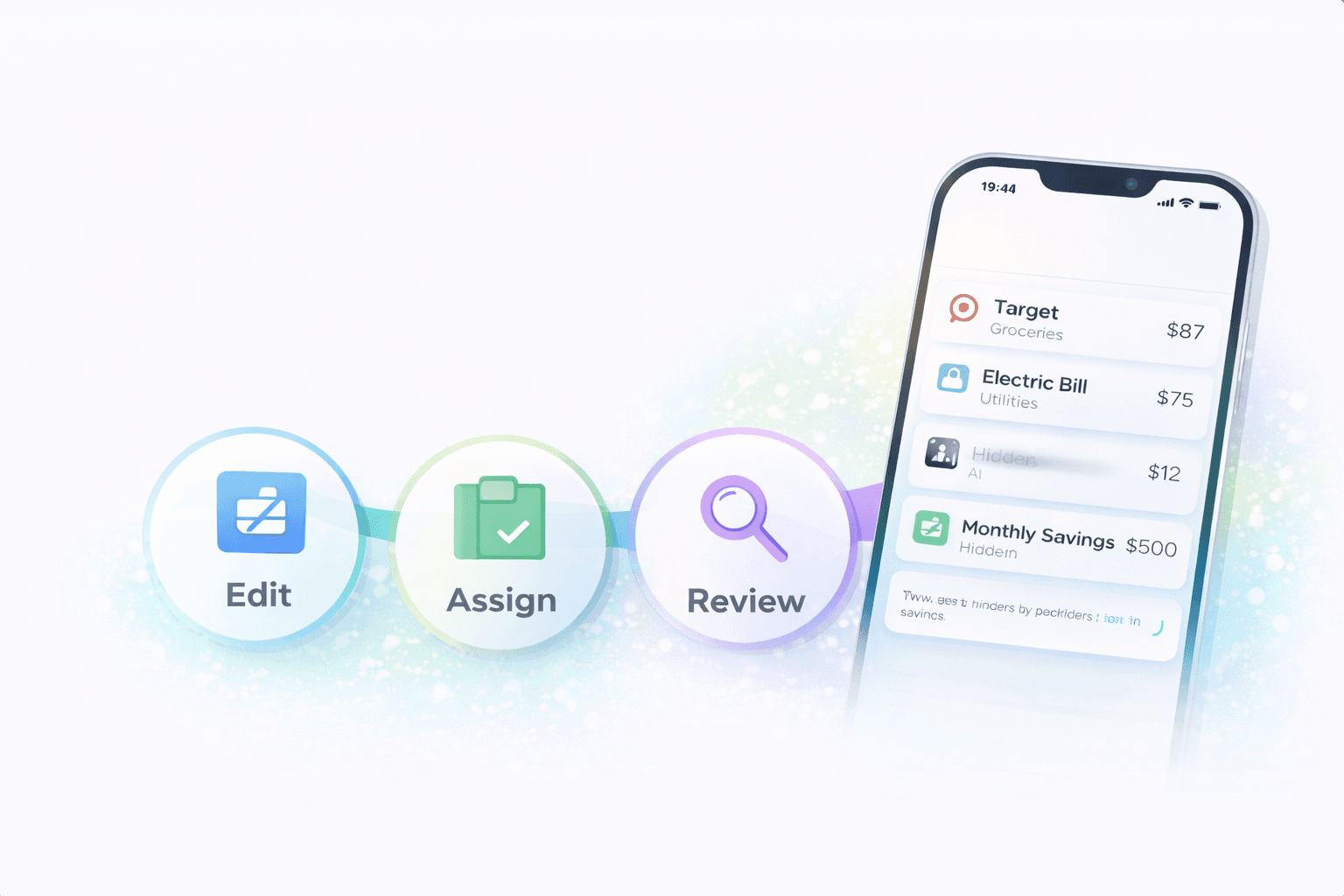
If you feel like you have subscriptions that aren't showing up in your app, you are probably right. Subscription detection can miss charges when merchants bill irregularly, use unfamiliar descriptors, or land on different cards from month to month.
The goal isn't expecting software to be perfect. The goal is combining automatic detection with a simple manual scan that catches the stragglers before they keep billing unnoticed.
Why recurring detection misses real subscriptions
Some merchants bill every four weeks instead of monthly. Others run annual renewals, change the descriptor slightly, or split taxes and add-ons into separate transaction names. That makes a repeating pattern harder to classify cleanly.
Households also spread subscriptions across multiple cards, which means the human memory of 'we already pay for that' can break down long before the recurring list looks complete.
How to reconcile the list manually without wasting an hour
Start by scanning the last sixty to ninety days for small digital charges, app stores, cloud tools, memberships, and streaming merchants. Then compare that manual list against what the recurring view already surfaced.
You aren't looking for every coffee purchase. You are looking for charges that repeat often enough to deserve a keep, downgrade, or cancel decision.
How to find subscriptions that were missed
- Review the recurring list first so you know what's already detected.
- Search the last two to three months for digital, app, membership, and streaming merchants.
- Look for small charges spread across multiple cards or members.
- Reconcile the manual list against the detected list and decide what still belongs.
Helpful next reads
Two missing-subscription patterns to watch
Example 1: An annual renewal hiding in plain sight
A $119 yearly software renewal posts each March, so it never looks 'monthly' enough to feel obvious. Because it only appears once a year, it's easy to forget until the statement closes.
A manual scan catches long-cycle recurring costs that pure monthly logic can miss.
Example 2: Small charges spread across cards
One partner pays $6.99 for extra cloud storage, the other has a $14.99 streaming add-on, and a third $4.99 photo app bills on a backup credit card. None is painful alone, but together they quietly pull $26.97 each month.
Cross-card review matters because the hidden total is what changes the decision.
Common mistakes when looking for hidden subscriptions
- Assuming the detected recurring list is complete and never running a manual reconciliation pass.
- Only checking the main checking account while smaller digital charges keep landing on backup cards or app-store billing.
Pro tips for a faster reconciliation
- Search by merchant category words like app, cloud, membership, or media to narrow the scan quickly.
- Review at least sixty days of history so four-week billing cycles and slightly irregular charges have a chance to show up.
How Stitch helps you find what auto-detection missed
Stitch surfaces recurring charges automatically, but it also keeps the underlying transaction list easy to search and review. That lets you reconcile the detected list against real transaction history instead of trusting a black box blindly.
The result is a cleaner subscription review: what's already identified, what still needs attention, and what should be canceled, downgraded, or kept.
Frequently asked questions
Why does subscription detection miss some charges?
It can miss charges that bill irregularly, renew annually, change merchant descriptors, or appear across multiple cards and members.
How far back should I look for hidden subscriptions?
Looking back sixty to ninety days usually catches most monthly and four-week patterns. Yearly renewals may need a longer memory or a separate note.
Are small app charges worth checking?
Yes. Small charges are exactly what tend to hide the longest because they don't feel urgent individually.
Should I trust the recurring list or the transaction search more?
Use both. The recurring list gives you a fast starting point, and the transaction search helps you find what the pattern matcher missed.
Can shared households miss duplicate subscriptions?
Yes. It's common for two people to pay for overlapping services on different cards without realizing it.
What should I do after I find a missing subscription?
Decide whether to keep it, downgrade it, or cancel it, then make sure the next review cycle captures it clearly so it doesn't go hidden again.