
Cleanup workflow
Clean up messy merchant names and categories so the rest of your money tools stop lying to you
Merchant cleanup isn't cosmetic. It improves reports, recurring detection, and every review that depends on transaction clarity.
Stitch Money Editorial Team · Published February 26, 2026
Editorial policy and correction standards
- Fix noisy merchant labels that hide the real charge
- Correct categories so reports become more trustworthy
- Use a short weekly cleanup workflow instead of a giant backlog
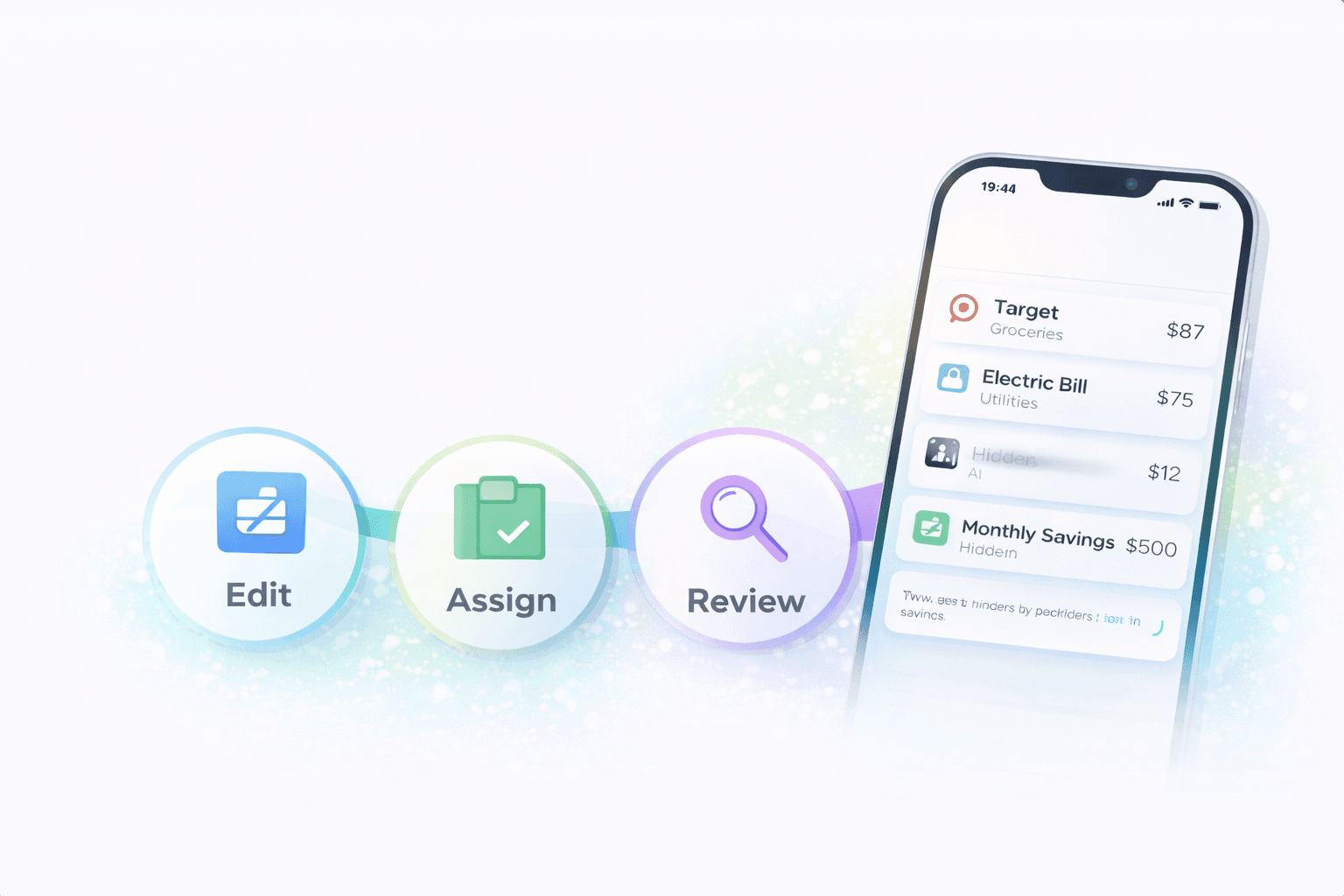
Messy merchant names and wrong categories create fake insights. A grocery charge filed under shopping, a utility billed with an unreadable descriptor, or a subscription hidden behind an app-store label can throw off reports and recurring tracking for weeks.
The good news is that cleanup work compounds. A small weekly pass through the noisiest items makes every downstream chart, recurring view, and household review more useful.
Why merchant cleanup matters more than people expect
Most reporting problems start in the transaction layer. If a merchant name is unreadable, it becomes harder to catch duplicates, harder to identify recurring bills, and harder to trust category trends.
Cleaning up the merchant and category once pays off across every future review. It turns the transaction from 'mystery charge' into a useful building block for the rest of the app.
The easiest cleanup order
Start with the charges that repeat or that affect the largest categories. Fixing the biggest recurring merchants improves more screens than polishing a random one-time purchase.
Then work through the confusing descriptors that slow you down during weekly review. A small cleanup list is much easier to maintain than a huge, vague promise to organize everything someday.
How to clean up merchants and categories quickly
- Review repeating merchants and the largest categories first.
- Search for unclear merchant names that appear in multiple variations.
- Correct categories that materially distort your reports or recurring view.
- Do a short cleanup each week so messy labels don't pile up.
Helpful next reads
Two cleanup fixes that improve multiple views at once
Example 1: One grocery merchant, three different names
The same store appears as a plain name, a card-terminal code, and an online-order descriptor across a month of spending. Unifying those entries turns a scattered report into one accurate grocery total.
Merchant cleanup improves reporting and weekly review in one step.
Example 2: Subscription hidden under a generic app store label
A $9.99 recurring charge looks like a generic mobile store purchase, so it never clearly appears in the recurring list. Re-labeling the merchant makes the subscription visible and easier to evaluate.
A cleaner merchant name can directly improve recurring detection and cleanup.
Common cleanup mistakes
- Trying to fix every transaction equally instead of prioritizing repeating merchants and high-impact categories.
- Ignoring messy labels because the amount is small, even though the same merchant keeps showing up and weakening the reports.
Pro tips for a lighter cleanup workflow
- Fix the merchants you expect to see again; repeat clarity is more valuable than perfecting one-off edge cases.
- Use your weekly review to clean a few noisy items while the context is still fresh.
How Stitch helps keep transaction data cleaner
Stitch gives households a single transaction workflow where merchant and category cleanup can happen during normal review, not in a separate admin task. That keeps the data healthier without adding much overhead.
Because cleanup improves reports and recurring visibility immediately, even a few small corrections each week can make the rest of the app noticeably more accurate.
Frequently asked questions
Why do merchant names show up messy?
Banks and processors often pass through shortened, coded, or inconsistent descriptors, which is why the same merchant can appear in multiple formats.
Does cleaning up merchant names really matter?
Yes. Cleaner merchants improve reports, recurring detection, and the speed of weekly transaction review.
What should I fix first?
Start with repeating merchants, large categories, and any charge that's clearly distorting your reports.
How often should I clean up categories?
A short weekly pass is usually enough. Small, consistent cleanup beats a huge backlog session.
Can merchant cleanup help me find subscriptions?
Yes. A recurring charge is easier to identify when the merchant label is clear and consistent.
Should I bother fixing tiny one-off charges?
Usually only after the repeating and high-impact items are clean. Repeat clarity creates the biggest payoff first.