Visual reporting

Use money flow charts that explain the pattern, not just decorate the dashboard

Different chart types answer different questions. Stitch helps households compare flow, category mix, and trend views so the visual matches the decision.

  • See how money moves from income to spending and savings
  • Use more than one chart type depending on the question
  • Move from the visual to the underlying transactions quickly
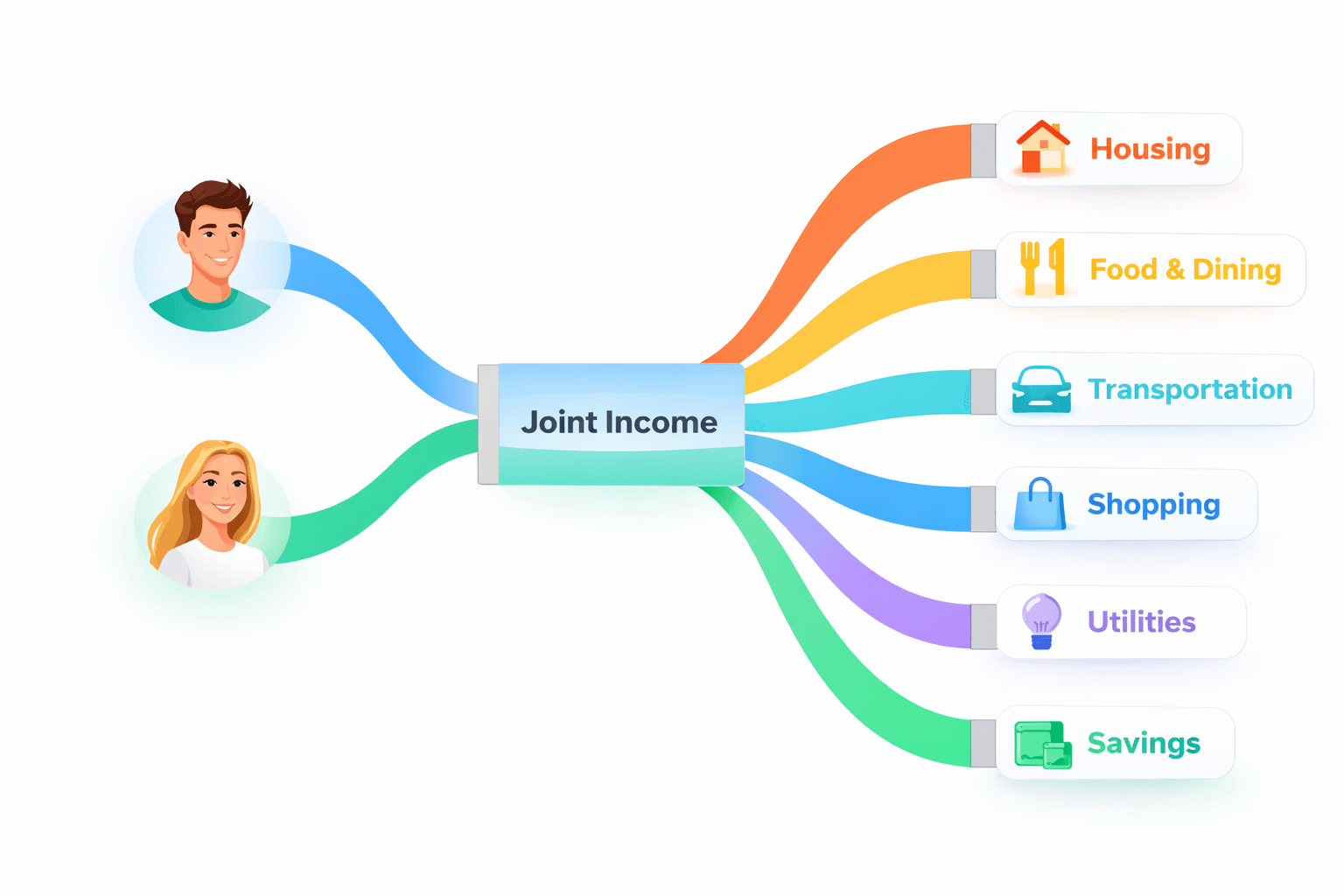
Stitch Money flow chart visualizing income moving into spending and savings
Different charts answer different questions, so the best visual depends on the decision in front of you.

Visual stack

Flow, mix, and trend

  • Flow for allocation
  • Category mix for concentration
  • Trend for what changed over time

Money flow charts are useful when they clarify movement, timing, or concentration. They aren't useful when they make the dashboard look busy but fail to answer a real question. The right visual depends on what you are trying to understand.

A flow diagram can show where income ends up. A category chart can show mix. A trend line can show whether the pattern is changing. Stitch is built around using the right visual for the job instead of forcing one chart for every question.

Which chart type helps with which decision

Flow charts are strong for seeing how income breaks into bills, discretionary spend, debt, and savings. Category charts help when you need mix and concentration. Trend charts help when you need to know whether the numbers are moving over time.

No single chart answers all three questions well. That's why households often need a visual stack rather than one favorite graphic used for everything.

How to keep money visuals from becoming noise

The easiest way to misuse charts is to stare at shapes without defining the question first. A chart should help you answer where the money went, what changed, or what's taking the biggest share.

Once the chart points to a pattern, you still need the ability to inspect the transactions or recurring charges behind it. The visual should shorten the path to insight, not replace the detail.

How to use money flow charts well

  1. Choose the chart type based on the question: flow, mix, or trend.
  2. Start with the biggest movement first before inspecting smaller categories.
  3. Use visuals to find the pattern, then verify it in the transaction data.
  4. Keep weekly and monthly comparisons separate so the chart stays readable.

Two chart choices that answer different questions

Example 1: Flow chart for paycheck allocation

A household brings in $6,800 net. A flow view shows $2,050 to housing, $1,180 to essentials, $640 to debt, $510 to childcare, and the remainder split between savings and flexible spend.

The flow chart answers where the paycheck is actually going in one glance.

Example 2: Trend chart for rising dining spend

Dining averages $240 a month, then climbs to $310, $348, and $392 across three months. A trend view makes the steady climb much more obvious than a single category chart.

The line is the better tool when the key question is whether the behavior is shifting over time.

Common money-chart mistakes

  • Using one chart type for every question, even when a different visual would show the pattern more clearly.
  • Treating the chart as the final answer instead of checking the transactions that created the shape.

Pro tips for clearer visual reviews

  • Pick the one decision you need before opening the chart; that keeps the visual focused and faster to read.
  • Use trend visuals for changes over time and flow visuals for allocation in a single period; mixing those jobs muddies the story.

How Stitch uses charts without losing the story

Stitch supports multiple visual views so households can look at allocation, category mix, and change over time without forcing one chart to do every job. The chart becomes a shortcut to insight rather than a decorative endpoint.

Because the visuals stay connected to real transactions, categories, and recurring bills, you can move from chart to explanation quickly when something looks off.

Visual clarity should still lead back to the real numbers

Money charts are most helpful when they stay connected to source transactions and understandable categories. Stitch keeps the visual layer tied to real account data so the insight is easier to trust.

Frequently asked questions

What's the best chart for showing where my money goes?

A flow-style chart is often best for showing how income gets allocated across bills, spending, savings, and debt in a single period.

What chart is best for tracking change over time?

A trend line or similar time-series view is usually better because it shows whether the number is climbing, falling, or staying flat across periods.

Are pie charts enough for money tracking?

They help with category mix, but they are weaker for timing and trend questions. Most households need more than one visual style.

Should I trust a chart without checking transactions?

A chart should point you in the right direction, but the transaction detail is still where you confirm what happened.

Do money flow charts work for households?

Yes. Shared visuals help households see the same allocation and discuss the same pattern instead of relying on summary guesses.

How often should I review money visuals?

Weekly for quick pattern checks and monthly for deeper trend comparisons is a strong baseline.

Get started

Use visuals that make the money story easier to read

Create a free Stitch account to see flow, category, and trend views that connect back to the real transaction detail.