
Money explainer
Bills paid from multiple accounts? Here's how to keep it organized
When rent comes from one account and utilities from another, bill planning gets messy — fix it with a simple setup.
Stitch Money Editorial Team · Published March 5, 2026
Editorial policy and correction standards
- Keep multi-account bill timing visible in one planning flow
- Use a simple setup whether you have a joint bills account or not
- Reduce the 'which account covers this?' confusion before due dates hit
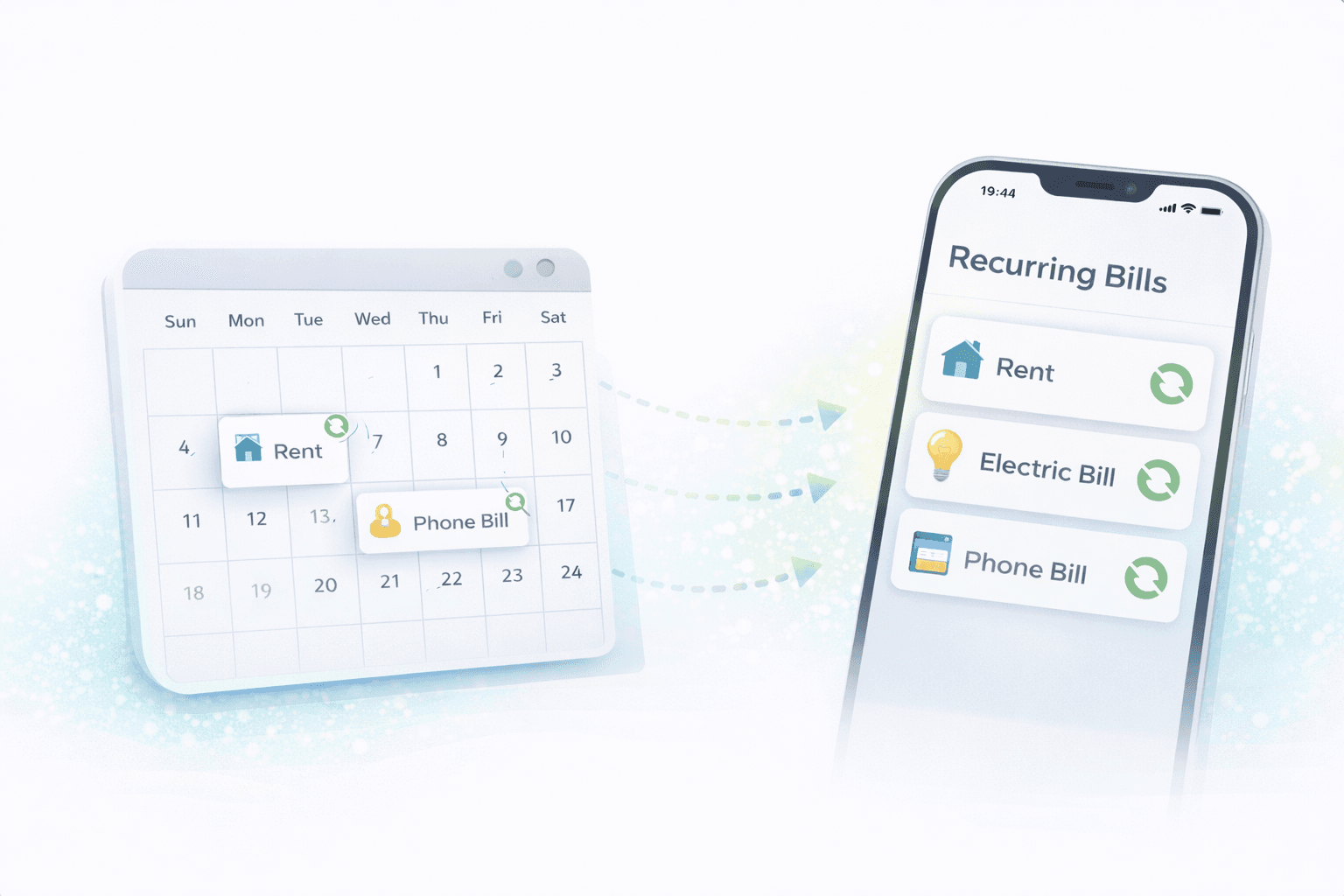
Bills paid from multiple accounts create a coordination problem, not necessarily a budgeting problem. The money may be there overall, but the real question is whether it's in the right account before the right draft happens.
That's why households can feel disorganized even when their total cash looks fine. Rent might draft from one account, utilities from another, and subscriptions from two credit cards. Without a single planning view, the week becomes harder than it needs to be.
The most common multi-account setups
Some households use one joint bills account plus separate personal accounts for the rest. Others keep everything separate and simply divide which person pays which recurring charges. Both can work, but both create account-specific timing risk.
The problem isn't the existence of multiple accounts. The problem is when the due date is visible but the funding source is still fuzzy.
Why the right account matters as much as the right amount
A household can have enough money in total and still overdraft the wrong account if the bill draws from a place that was not funded in time. That's why total balance alone isn't enough for bill planning.
A useful system tracks the due date and the likely funding account together, especially for bills that stay on autopay.
How to keep the setup simple
The easiest approach is to make the recurring bill list explicit, note which account each bill actually uses, and review the next seven to ten days rather than the whole month in a blur.
This keeps the plan grounded in operational reality. The key question becomes: is the right account ready for the next charge, not merely is the household fine in aggregate.
Where households usually get tripped up
The most common issue is assuming a transfer will happen 'later' and forgetting which bill drafts first. That creates preventable stress even when the money exists elsewhere.
A second issue is letting subscriptions and smaller utilities scatter across too many cards or accounts, which hides the real cadence of what needs funding next.
A simple multi-account bill setup
- List each recurring bill with its due date and the account it actually drafts from.
- Review the next seven to ten days so only the near-term account funding decisions matter.
- Move money into the right account before the bill cluster, not after it starts.
- Keep smaller subscriptions visible too, because they can be the charges that accidentally hit the underfunded account.
Helpful next reads
Two common multi-account bill patterns
Example 1: Joint bills account plus personal accounts
Rent of $1,900 and internet of $82 draft from the joint bills account, while one partner's auto insurance of $148 and the family streaming stack of $41.97 still sit on personal cards. The household is fine overall, but only if the joint account is funded before the 1st and the smaller personal-card bills aren't forgotten.
The plan works when the funding source for each bill is explicit instead of assumed.
Example 2: Fully separate accounts, divided responsibilities
One roommate pays the $74 utility package and the other pays the $61 Wi-Fi and cleaning subscription stack. If the due dates cluster in the same week, it helps to see the timing in one shared view even though the accounts stay separate.
Multi-account setups become manageable once the timing and ownership are visible together.
Common mistakes in multi-account bill planning
- Checking total household cash without checking whether the specific account that will be charged is actually ready.
- Letting smaller recurring charges scatter across cards and accounts until the real bill cadence becomes hard to see.
Pro tips for keeping recurring bills accurate
- Review due dates and funding accounts together so the plan reflects where the money must be, not just how much exists overall.
- If you use a joint bills account, fund it before the cluster starts instead of topping it up midstream after the first draft.
How Stitch helps keep multi-account bill planning readable
Stitch brings recurring bills and transaction review into one shared planning flow, which makes it easier to see the next bill cluster even when the household pays bills from multiple checking accounts or cards. The goal isn't to force one account. The goal is to make the timing visible.
For households using Patch, that shared view reduces the 'I thought you had that one' problem because both people can see which bills are coming up and which part of the system still needs attention.
Frequently asked questions
Can you manage bills well across multiple accounts?
Yes. The key is to track the due dates and the actual funding account together instead of relying only on the total household balance.
What's the most common problem with multi-account bills?
The household often has enough money overall, but the wrong account is short when the bill actually drafts.
Does a joint bills account solve everything?
It can simplify part of the setup, but many households still have smaller recurring charges on personal cards or accounts that need attention too.
How far ahead should I review the bills?
The next seven to ten days is usually the most practical window, because that's where the immediate funding decisions live.
Can roommates use the same system?
Yes. The same visibility helps whenever different people and different accounts cover different recurring charges.
How does Stitch help with this?
Stitch keeps recurring bills visible in one planning flow so you can see what's due next even when the charges come from multiple accounts and cards.