
Competitor-intent
Rocket Money Payday View — how it works (and how to replicate it)
See what bills hit before your next paycheck, avoid overdrafts, and plan the week ahead.
Stitch Money Editorial Team · Published March 5, 2026
Editorial policy and correction standards
- Understand the timing logic behind payday-based planning
- See why the view can get messy with multiple accounts or uneven pay
- Map the same job to Stitch Recurring and upcoming bills
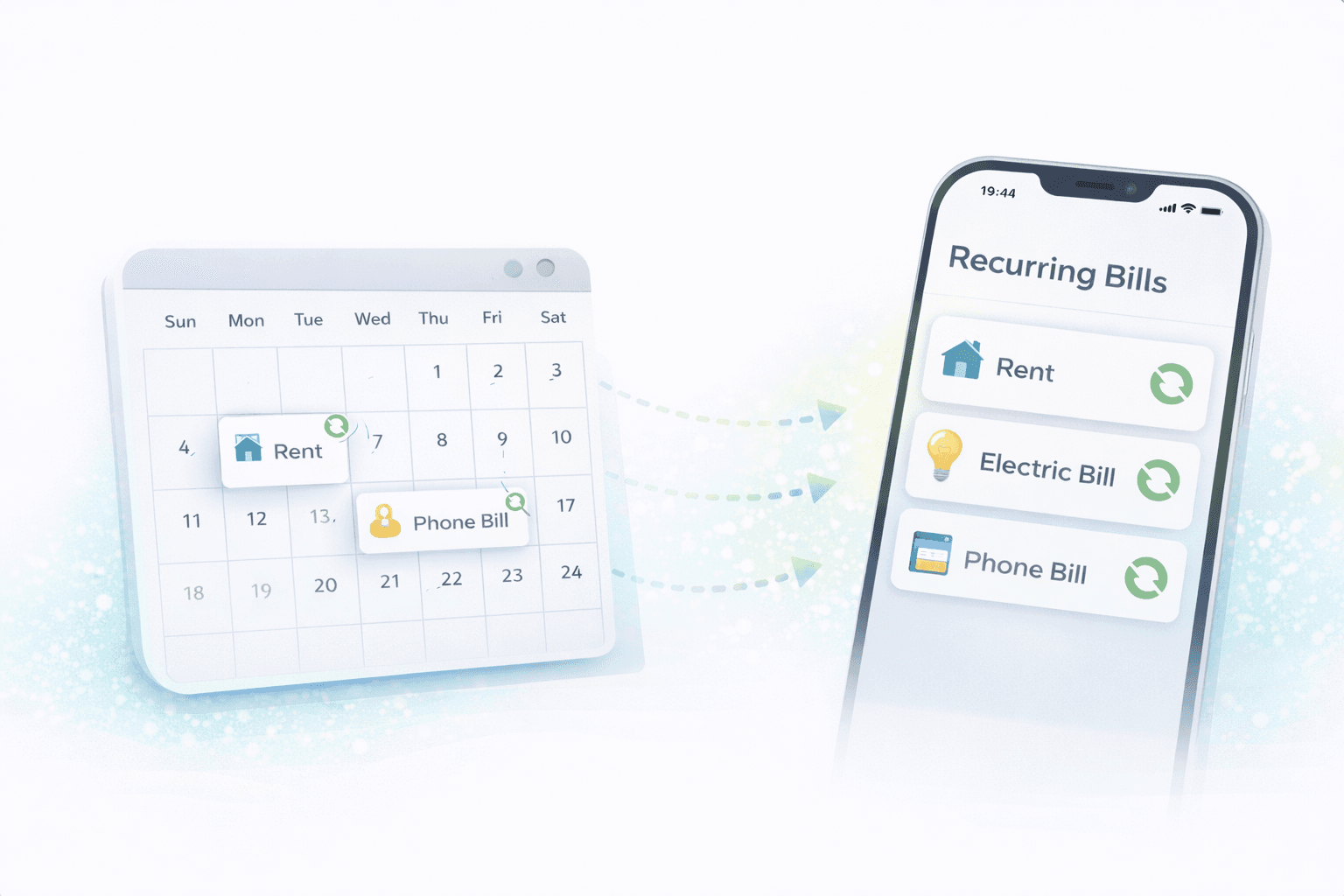
People searching for Rocket Money Payday View are usually trying to answer a single timing question: what has to clear before the next paycheck hits. That's not the same question as monthly budgeting. It's a shorter, more urgent planning window.
The feature idea is straightforward and useful. The hard part is making the timing accurate when income is split, bills come from several accounts, or the household gets paid on multiple schedules. That's where a payday view can either calm you down or make you second-guess the math.
How payday timing is supposed to work
A payday view tries to draw a line between now and the next paycheck, then show what bills, recurring charges, and known obligations land inside that window. It's a way to pressure-test the next few days instead of thinking only in monthly totals.
That's helpful because many overdrafts and late-fee moments are caused by short timing gaps, not by a month that's impossible overall. The next eight days often matter more than the next thirty.
Why it breaks with multiple accounts or variable pay
The logic gets shakier when the household keeps bill money in one account, spending money in another, and income arrives in split deposits across both. The window may still be right, but the available pool can be harder to interpret cleanly.
Variable pay introduces a second problem: uncertain arrival. If the view counts income that's expected but not yet reliable, the plan can look safer than the week really is.
The real value is seeing the cluster early
The most practical benefit isn't the layout itself. It's the early warning. If three bills hit before the next deposit, you can move spending, move a transfer, or simply avoid acting like the current balance is wide open.
That's why the feature resonates. It answers a question users ask constantly: can I get through this week without a squeeze.
How to replicate Payday View in Stitch
In Stitch, the same planning job comes from the combination of Recurring, the upcoming bills list, and a quick cash-flow check. Instead of relying on a branded feature name, you review what's due next and compare it against the actual timing of the next deposit.
That often works better for households because the bills and transactions stay inspectable. If something looks off, you can trace the bill source or the income source directly instead of wondering which hidden rule drove the summary.
How to do a payday-window check in under five minutes
- Mark the date of the next paycheck and treat that as the end of the planning window.
- List every recurring bill or card payment due before that date, not just the largest ones.
- Check which account each bill actually drafts from if you use more than one checking account.
- Keep a small floor in the account so one variable charge doesn't erase the whole plan.
Helpful next reads
Two payday windows that show why timing beats guesswork
Example 1: Paycheck in 8 days, three bills due first
The next paycheck lands next Thursday. Before then, internet drafts for $82 on Monday, a credit card minimum of $97 hits Tuesday, and auto insurance drafts $146 on Wednesday. With only $410 of truly available cash in the checking account, the window is manageable only if no extra discretionary spend sneaks in.
The payday view is useful because it makes the squeeze visible while there's still time to act.
Example 2: Two paychecks a month, uneven bill schedule
A household gets paid on the 1st and 15th, but rent of $1,740, daycare of $520, and the electric bill of $168 all land between the 10th and 14th. The first paycheck feels flush, yet the second week runs tight if those bills aren't treated as already spoken for.
The window matters more than the monthly average because the hard part happens in the gap.
Common payday-view mistakes
- Looking at the next paycheck date without checking which bills draft before it from which account.
- Counting variable or late freelance income as if it's already safely in hand for the current window.
Pro tips for a steadier payday check
- Focus on the next seven to ten days first. That's where most practical timing problems show up.
- If a bill is variable, plan around the high side of its normal range instead of the cheapest recent month.
How Stitch helps with the same payday-planning job
Stitch uses Recurring, upcoming bills, and cash-flow context to show what matters before the next paycheck. That gives you the same practical planning benefit without hiding the bill list or the transaction details behind a branded summary view.
Because the bills stay linked to real account activity, you can also handle multi-account households more cleanly: see what's due, see where it drafts, and decide whether the current week needs a transfer or a spending pause.
Frequently asked questions
What's a payday view supposed to show?
It's supposed to show what bills and obligations land before your next paycheck so you can plan the short gap instead of relying on a monthly average.
Why is payday timing more helpful than a monthly total?
Because most cash stress comes from a tight week, not from the whole month in aggregate. The next gap is where overdrafts and late fees usually happen.
Why does payday planning get messy with multiple accounts?
Because the bill may be due in the right window, but it still matters which account it drafts from and whether the money you are counting is actually in that account.
Does this work with biweekly or twice-monthly pay?
Yes, but the bill cluster can look different. The view is still useful as long as you compare the real due dates against the correct pay schedule.
What if my income changes every week?
The concept still helps, but the planning should use conservative expected income and a larger buffer so the window stays realistic.
How does Stitch replicate Payday View?
Stitch combines Recurring, the upcoming bills list, and cash-flow review so you can see what's due before the next paycheck and inspect the underlying bills directly.