
Competitor-intent
Rocket Money 'Safe to Spend' — what it really means
A plain-English breakdown of the math, the common traps, and how to get the same clarity using bills and payday timing.
Stitch Money Editorial Team · Published March 5, 2026
Editorial policy and correction standards
- Understand the real math behind a 'safe today' number
- See where fixed-pay and variable-pay households trip over it
- Translate the concept into a practical Stitch routine
When people search for Rocket Money Safe to Spend, they usually aren't hunting for a slogan. They want a number that tells them what they can spend today after bills, essentials, and near-term obligations are accounted for. That's the appeal: less guesswork, less stress, and fewer late-week surprises.
The catch is that a safe-to-spend number is only as good as the underlying income, bill timing, and transfer logic. If a paycheck is missing, a credit card payment is counted like spending, or bills are spread across multiple accounts, the number can feel wrong even when the concept itself is useful.
What people mean when they search this
Most searchers want one short answer: how much can I spend before the next paycheck without creating a problem. They are trying to replace fuzzy mental math with a single guardrail they can trust on a Tuesday afternoon.
The user language around Safe to Spend usually points to anxiety about bill clusters, overdrafts, and whether the app is subtracting the right things. The intent is less 'teach me budgeting theory' and more 'tell me if dinner out is fine tonight.'
What safe-to-spend is, and what it's not
A safe-to-spend number is a short-term planning figure. It's not your checking balance, not your monthly discretionary budget, and not a promise that nothing unexpected will happen this week.
A good version subtracts the bills and essentials that matter before the next income event. A bad version accidentally treats transfers as spend, misses recurring bills, or assumes your cash is all in one place when it's not.
Where the math works best
The concept works best when income is predictable, recurring bills are visible, and the app correctly separates spending from money-moving transactions. That's why users with one main checking account and steady payroll often like the feature quickly.
It gets shakier when the household has split deposits, side income, multiple checking accounts, or manual reimbursements. In those setups, the concept still helps, but the data model needs more care before the number becomes trustworthy.
If you like Safe to Spend, here's how Stitch covers that job
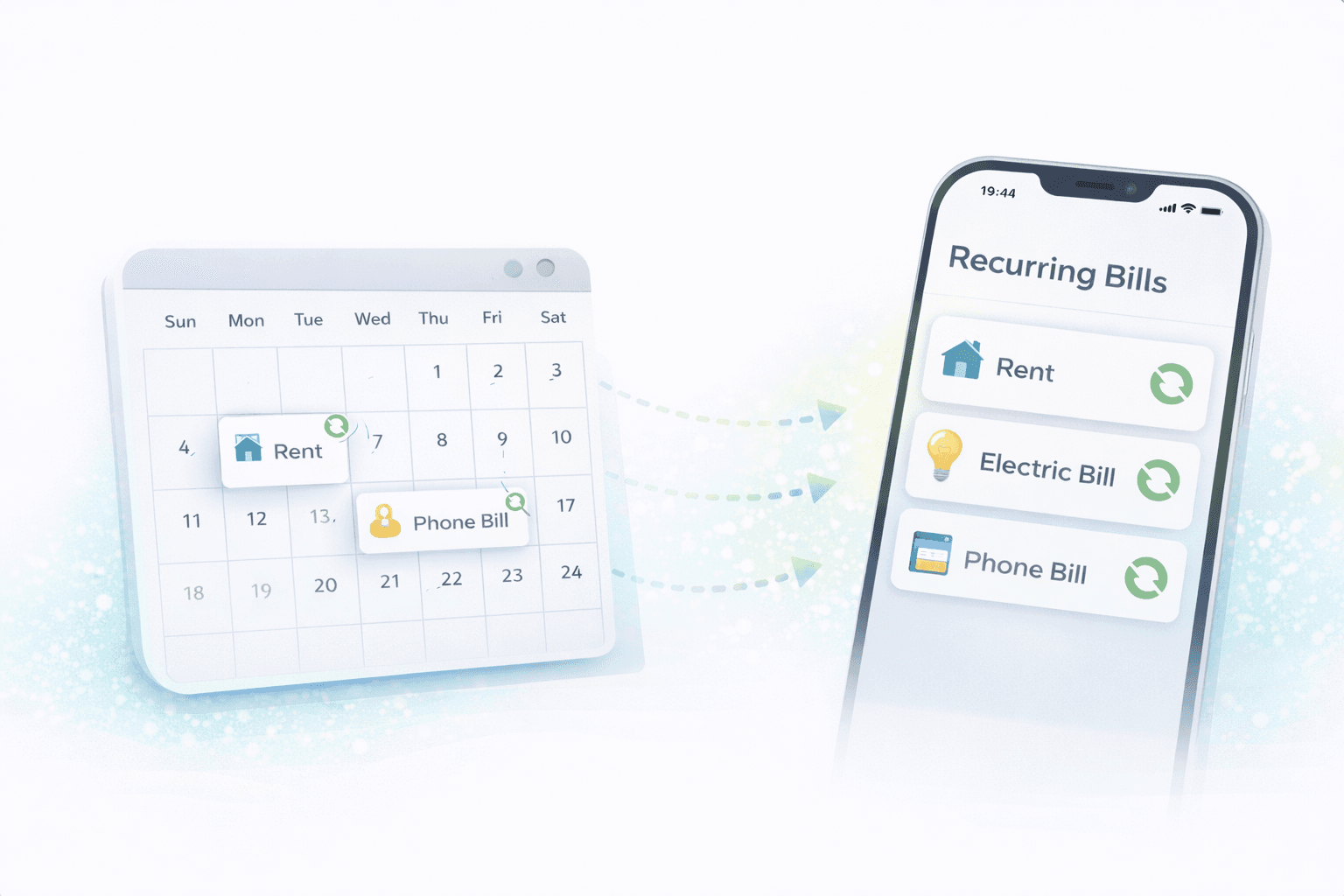
Stitch approaches the same decision from bills and timing first. Instead of pretending one magic number is enough by itself, Stitch helps you look at upcoming recurring charges, transaction accuracy, and the next paycheck window together.
That's often more stable for households, because the answer stays tied to visible bills, real transaction review, and the shared household context that Patch adds when more than one person affects the same week.
A quick way to sanity-check a safe-to-spend number
- List the bills due before the next paycheck, not just the bills due this month in general.
- Make sure transfers and credit card payments aren't being treated like fresh spending.
- Check whether any paycheck, split deposit, or reimbursement is missing from the income view.
- Use the number as a short-term guardrail for this week, not a full replacement for reviewing bills and cash flow.
Helpful next reads
Two examples that show why the number can feel useful or broken
Example 1: Fixed income, predictable bills
A household brings home $4,800 per month in steady payroll, has $1,650 rent, $210 utilities, $640 groceries, and $190 in near-term recurring charges before the next payday. After subtracting the upcoming obligations and a $300 buffer, a short-term safe-to-spend number can genuinely help them decide whether a $75 weekend expense fits.
The math feels calm because the bills and timing are stable enough for one short number to be useful.
Example 2: Variable income, same concept but shakier inputs
A freelancer gets $1,200 this week, expects another $900 next week, but a client often pays two days late. Rent of $1,480, software of $62, and groceries of $165 all hit before the second payment clears. If the app assumes the late invoice is already safe, the 'safe' number can overshoot by hundreds.
The concept still helps, but only if the income assumptions stay conservative.
Common traps that make safe-to-spend feel wrong
- Treating the number like spendable cash for the whole month instead of a short-term figure tied to the next paycheck window.
- Trusting the output before checking whether transfers, credit card payments, or missing income are distorting the inputs.
Pro tips for using the concept without depending on magic
- Use a hard buffer floor so the number still leaves room for one variable bill to run high.
- When the number looks off, inspect the bills due next and the transaction math before assuming the feature itself is broken.
How Stitch helps if you want the same kind of clarity
Stitch gives you the pieces a safe-to-spend number depends on: recurring bills, upcoming timing, clean transaction review, and a cash-flow view that shows what hits before the next payday. That's often more transparent than relying on a single summary number without checking the ingredients.
For shared households, Stitch also keeps the conversation grounded in Patch, so both people can see the same bills, the same transaction corrections, and the same tight week before anyone overspends based on an incomplete picture.
Frequently asked questions
What does 'Safe to Spend' usually mean?
It usually means a short-term estimate of what you can spend before the next paycheck after bills and key essentials are accounted for.
Is 'Safe to Spend' the same as my checking balance?
No. Your checking balance is what's there right now. A safe-to-spend number should subtract the bills and essentials that still need that money before the next income lands.
Why does the number feel wrong sometimes?
It often feels wrong when the app missed a paycheck, counted a transfer as income, treated a credit card payment like spending, or failed to include a bill due soon.
Does this work for variable income?
Yes, but only if the math uses conservative expected income and a stronger cash buffer. Variable pay makes the number less stable if the forecast is too optimistic.
Is a safe-to-spend number enough by itself?
It's useful as a quick guardrail, but it works best when paired with bill timing and a quick weekly check of what's due next.
How does Stitch cover this job?
Stitch approaches the same decision through recurring bills, upcoming timing, transaction cleanup, and cash flow, so the short-term answer stays tied to the real bills and paydays in front of you.