
Money explainer
Tags vs categories vs notes — what to use (and when)
A simple system for tracking shared expenses, trips, and one-off projects without wrecking your budget.
Stitch Money Editorial Team · Published March 5, 2026
Editorial policy and correction standards
- Understand when categories alone are too blunt
- Use labels conceptually for projects, reimbursements, and shared context
- Keep the core budget readable while still tracking special cases
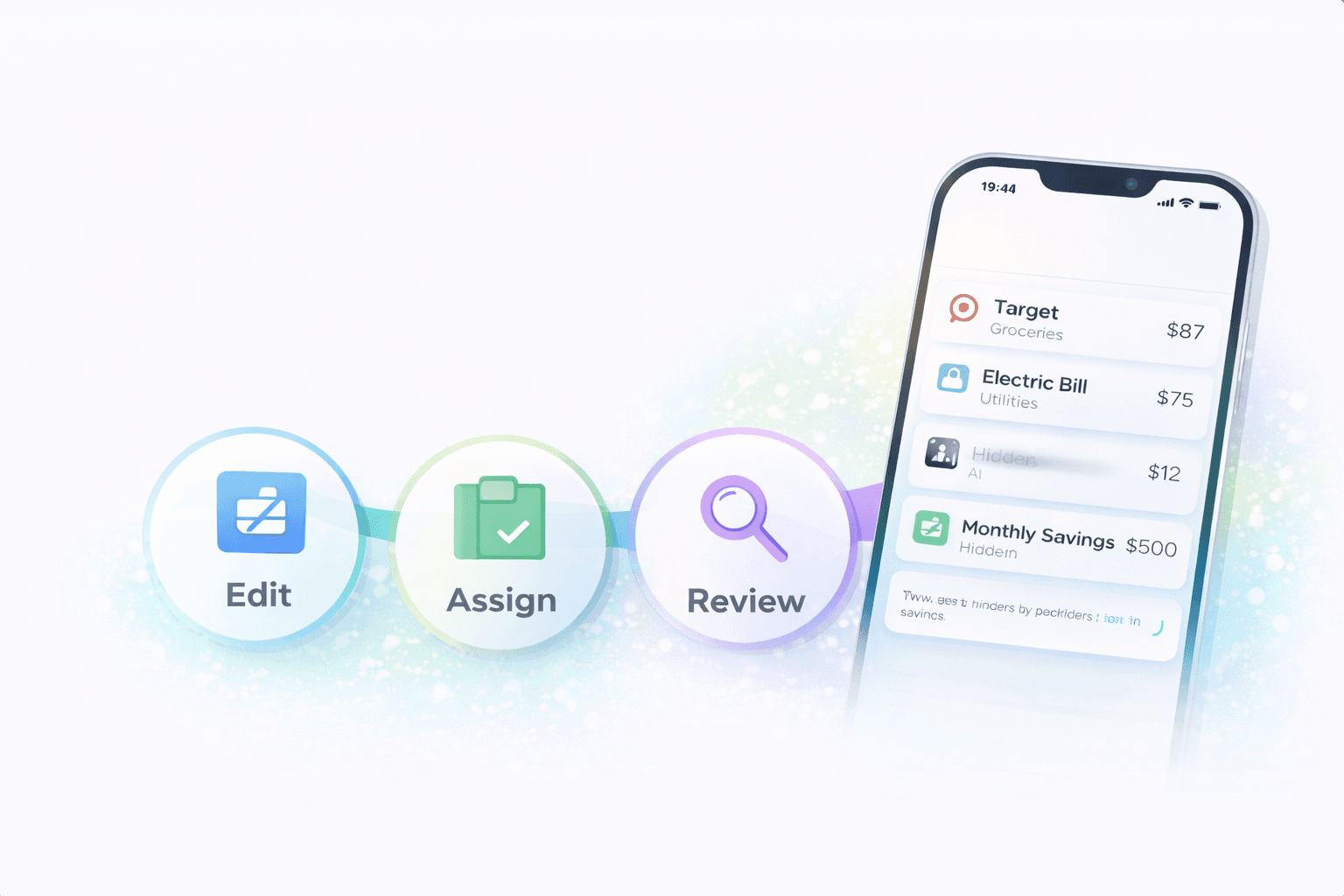
Categories answer the broad budgeting question: what kind of spending was this. Tags and notes answer a different question: what specific project, trip, or temporary context did this belong to. The confusion starts when people try to make one tool do both jobs.
A category should stay broad enough to keep the budget readable. The more specific context belongs in an additional label or note, especially for shared households juggling trips, reimbursable items, and one-off seasons of spending.
When categories are too blunt
Categories are supposed to stay broad. Travel, groceries, dining, childcare, and utilities help you understand the main shape of the budget. They stop helping when you overload them with temporary projects and special events.
If you create a brand-new category for every trip, wedding, or home project, the core budget becomes noisy and much harder to compare month to month.
What tags and notes solve conceptually
Tags and notes are useful because they layer temporary meaning on top of a stable category. A travel dinner can still be dining, while the project label tells you it belonged to a specific trip.
That's especially useful for households, because shared context often matters more than raw category. You may want to know that a charge was reimbursable, shared, or tied to a one-time event without destroying the budget structure.
Good examples of project-style labeling
Labels like 'Trip 2026,' 'Reimbursable,' and 'Shared' are examples of context layers, not replacements for categories. They help you isolate one-off totals while the core category keeps the monthly budget readable.
The goal is clarity, not complexity. A small label system works best when it stays focused on temporary or cross-cutting context.
How to avoid turning the system into clutter
The easiest failure mode is inventing too many labels. If everything gets a special tag, the second layer becomes as noisy as the category layer it was meant to protect.
A simple rule works best: use categories for recurring budget structure, and use labels only when the transaction belongs to a short-term project, reimbursement, or shared household context worth isolating.
A simple system for categories, labels, and notes
- Keep categories broad enough to explain recurring budget patterns month to month.
- Use project-style labels only for temporary events, reimbursements, or cross-cutting shared context.
- Avoid creating one-off categories for things that would make more sense as a note or tag concept.
- Review special labels after the project ends so the system stays lean.
Helpful next reads
Two examples where categories alone are too blunt
Example 1: 'Trip 2026' without wrecking dining and travel
A family spends $480 on flights, $220 on dining, and $140 on local transit during a spring trip. Keeping those in travel and dining preserves the real budget categories, while a 'Trip 2026' label isolates the one-time project total.
The trip is easy to total up without permanently warping the category structure.
Example 2: Reimbursable work expenses in a shared household
One partner spends $86 on client travel meals and $42 on parking that will be reimbursed later. The category can stay dining or transportation, while a 'Reimbursable' label keeps those charges easy to spot and separate mentally from household spending.
The monthly budget stays readable without losing the reimbursement context.
Common mistakes with labels and categories
- Creating a new category for every one-off event until the category list stops being useful for real month-to-month tracking.
- Using too many labels at once, which turns the second layer into its own clutter problem.
Pro tips for keeping the system simple
- Protect the core categories first. If a special case is temporary, it probably belongs in a secondary label or note, not in a whole new category.
- In households, use shared context sparingly for the situations that truly affect a shared conversation, such as reimbursable or project-based spending.
How Stitch helps keep the budget readable even when life gets specific
Stitch is strongest when the core transaction categories stay clean, because that keeps spending reports, recurring detection, and weekly reviews much easier to trust. For one-off projects and shared context, Stitch's transaction review and Patch visibility help keep the broader picture grounded without overloading the category structure.
In practice, that means you can keep the main budget readable, use household context where it genuinely matters, and avoid turning every trip or side project into permanent category clutter.
Frequently asked questions
What's the difference between a category and a tag?
A category describes the broad type of spending. A tag or note usually describes a more specific project, event, or temporary context layered on top of that category.
When are categories too blunt?
They are too blunt when you need to isolate a one-time project, reimbursable item, or shared context without destroying the broader budget structure.
Should I make a category for every trip?
Usually no. It's often cleaner to keep the normal categories and use a project-style label concept for the trip context instead.
How do tags help households?
They help households separate shared context, reimbursable items, or one-off projects without turning the main budget into clutter.
Can too many tags become a problem?
Yes. If every transaction gets a special label, the second layer can become as messy as the first.
How does Stitch help here?
Stitch helps most by keeping categories and transaction review cleaner, while Patch provides the shared household context that prevents special cases from distorting the core budget view.