
Money clarity
The 12 questions that make a 'money date' actually work
A 15-minute script couples can use to reduce money fights without turning it into a spreadsheet meeting.
Stitch Money Editorial Team · Published March 11, 2026
Editorial policy and correction standards
- A repeatable script you can run in 15 minutes
- Prompts that balance boundaries with shared planning
- Built around bills, timing, and one decision at a time
Most money dates fail because they are too broad. Two people sit down to "talk about finances" and accidentally open twelve topics at once: bills, spending, debt, goals, and whatever annoyed them last week. The conversation gets tense, then postponed.
A better money date has a script. You review recurring bills, scan recent spending, ask a short set of alignment questions, and leave with one clear next step. When couples search for money date questions, this is usually what they need: structure that protects the relationship and still moves the numbers.
Why most money dates become arguments
People usually bring different objectives into the same conversation. One person wants reassurance. The other wants a concrete plan. Without a structure, both leave feeling unheard.
A short script solves that mismatch because it creates turns: first facts, then feelings, then one decision. It isn't rigid; it's a guardrail against spiraling.
The 12-question script
Use four prompts for timing: what bills hit before the next payday, what amount looks tight, which transfer needs to happen, and where the buffer floor should sit this week.
Use four prompts for ownership: which charges were shared, which were personal, which category moved more than expected, and whether any recurring charge needs confirmation.
Use four prompts for action: one thing to pause, one thing to automate, one thing to revisit next week, and one appreciation statement so the meeting doesn't end as a blame session.
Boundaries that keep the meeting healthy
Set a time limit and stick to it. A 15-minute cap keeps the conversation tactical and prevents old resentment from turning this into relationship court.
Agree that each person can mark one purchase as "no debrief needed." That simple permission removes surveillance energy while still preserving shared visibility for household decisions.
What to review every single week
The minimum weekly review is three screens: Recurring for due dates, Transactions for what actually posted, and Spending for category changes worth discussing.
If you skip one, skip the long-range goals. Don't skip upcoming bills. Timing friction creates most avoidable stress for couples.
How to keep momentum after week one
Capture one line after each money date: what changed and what you decided. In four weeks, you get a record of progress instead of vague memory.
Small consistency beats occasional deep dives. Couples who do this weekly tend to fight less about surprise charges because the surprises are caught earlier.
15-minute money date setup
- Open Recurring and list bills due before the next paycheck.
- Scan Transactions and flag any charge either person doesn't recognize.
- Pick one spending category with the biggest week-over-week change.
- Leave with one action item and schedule the next check-in.
Helpful next reads
Two couples using the script differently
Example 1: New apartment, tight first month
A couple moving in together has rent at $2,100 on the 1st, internet at $85 on the 3rd, and groceries already at $340 halfway through the week. Their money date focuses on timing and one decision: pause a $220 furniture purchase until after the second paycheck.
They avoid dipping below their $500 buffer and keep the conversation calm because the decision is specific.
Example 2: Different spending styles, same household plan
One partner likes daily coffee stops and spends around $65 weekly; the other prefers larger weekend shopping runs. Instead of arguing over style, they use the script to set a shared dining cap of $180 for the remaining 10 days before payday.
The meeting produces a shared target without forcing identical habits.
Common mistakes
- Trying to settle every long-term goal in one sitting instead of handling this week's timing problem first.
- Using the meeting to audit each other line by line, which turns clarity into control.
Pro tips
- Start each money date with a single sentence: "Our goal tonight is fewer surprises before payday."
- Rotate who leads the checklist so the process feels shared, not assigned.
How Stitch helps couples run money dates without drama
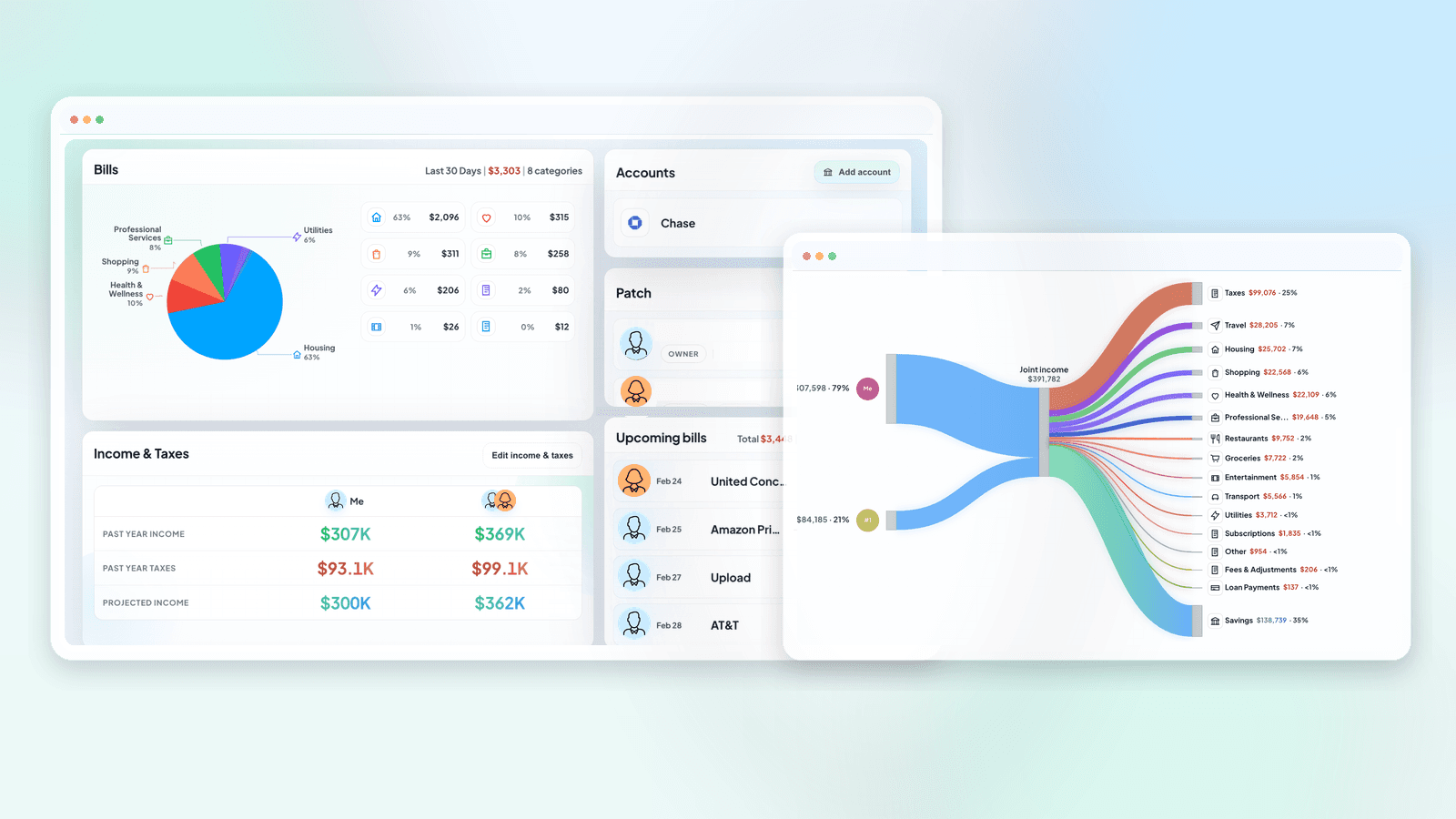
Stitch gives couples one shared view through Patch, with Recurring for due dates, Transactions for quick verification, and Spending for trend context. That keeps the discussion on real numbers instead of memory.
Because the workflow is organized by timing and ownership, couples can decide faster and avoid the stale spreadsheet cycle. You can keep personal boundaries while still making household decisions together.
Frequently asked questions
How long should a money date take?
For most couples, 15 minutes works best. Long sessions usually produce fatigue, not better decisions.
What if one person hates budgeting apps?
Use the script with one person driving the screen. The second person can still participate in decisions without handling every click.
Should we review every transaction together?
No. Review shared-impact items first: recurring bills, large category changes, and unknown charges.
How often should couples do this?
Weekly is usually enough to catch bill timing issues before they become fights.
Can this work if we keep separate accounts?
Yes. The script works with separate, joint, or mixed account setups as long as the shared obligations are visible.
What should we do if the conversation gets emotional?
Pause the numbers, restate one shared goal, and return to one decision for this week only.