
Money clarity
Financial transparency without surveillance
How to share finances in a way that builds trust instead of resentment.
Stitch Money Editorial Team · Published March 11, 2026
Editorial policy and correction standards
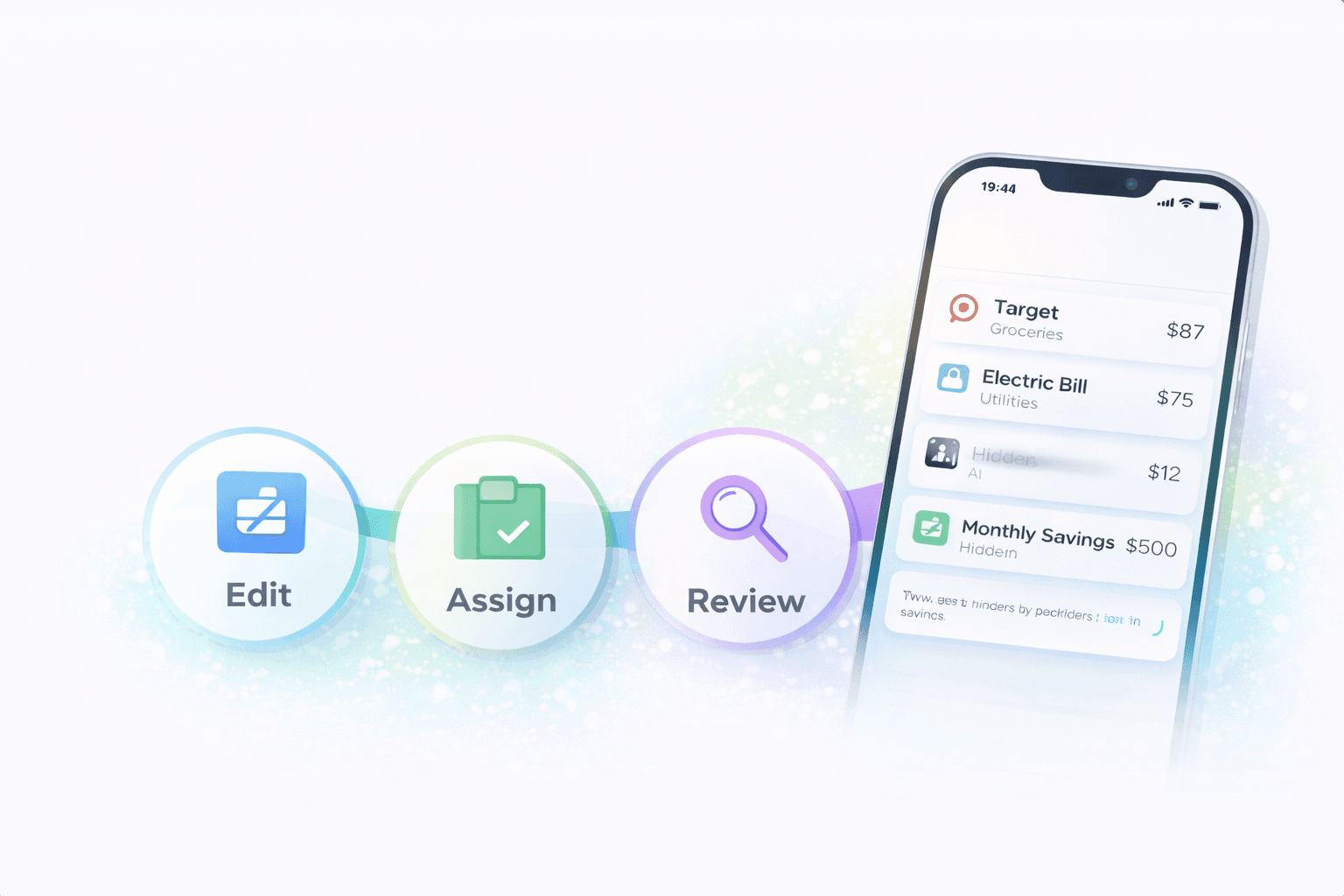
- Use a permissioning mindset, not all-or-nothing sharing
- Define what's visible, what's private, and why
- Review shared impact items without policing personal behavior
Many people want financial transparency but fear the emotional cost. They worry that sharing data will turn into criticism, monitoring, or endless explanations for ordinary purchases.
That fear is valid. Transparency works only when it has boundaries. The practical target is high visibility for shared risk and high respect for personal autonomy. You can build trust without building surveillance.
Start with a permissioning mindset
Think in permissions, not exposure. Decide which information is required to run the household safely, and keep that lane visible to both people.
Then decide what remains personal by default. Permissioning makes sharing intentional and lowers the pressure to justify every transaction.
What should usually be shared
Shared visibility usually includes recurring bills, due dates, major debt obligations that affect cash flow, and category-level shifts that influence joint decisions.
Personal details can stay private when they don't create household risk. The boundary is impact, not moral value.
Visibility vs control in practice
A partner can have visibility into a bill schedule without having control over account transfers. Separating those rights reduces power struggles.
If a control right is needed temporarily, define a date and reason so it doesn't become permanent by accident.
How to talk about privacy rules
Use specific language: "I need shared visibility for rent and utilities, and I want personal discretionary purchases to stay private unless they affect our buffer."
That phrasing avoids labels like secretive or controlling and keeps the conversation operational.
When trust is already strained
Begin with the smallest reliable routine: one weekly check of upcoming bills and one category shift. Don't attempt full historical reconstruction during conflict.
Consistency rebuilds trust faster than one intense transparency sprint.
Privacy-first transparency checklist
- List shared-risk items that both people must see weekly.
- List personal items that stay private by default.
- Define one escalation rule for purchases above a chosen threshold.
- Review the rules monthly and adjust based on real friction.
Helpful next reads
Two setups that balance transparency and autonomy
Example 1: Couple with separate spending styles
They share visibility on rent $2,250, utilities $280, childcare $540, and all recurring household charges. Personal shopping categories stay private unless monthly totals exceed a pre-agreed 15% overspend threshold.
Both people feel informed about risk without feeling monitored.
Example 2: Newly merged household after marriage
They create a shared lane for all obligations due before payday and keep legacy individual debt details private except for monthly progress updates. A 20-minute Sunday review focuses on due dates and category drift.
Trust grows through repeated structure instead of forced full disclosure overnight.
Common mistakes
- Equating transparency with constant account-level oversight for every transaction.
- Leaving privacy rules unwritten, which causes conflict when expectations differ.
Pro tips
- Use shared language like "household impact" and avoid loaded labels in discussions.
- Revisit rules after major life events, not only after arguments.
How Stitch supports trust-focused transparency
Stitch organizes shared financial decisions around Recurring, Transactions, Spending, and Patch collaboration. That gives households practical visibility into risk without requiring full control sharing.
Income & Taxes context helps planning conversations stay grounded in take-home timing. When long-term clarity is needed, Net Worth is available in Premium with once-daily midnight snapshots.
Frequently asked questions
Can transparency work without sharing every purchase?
Yes. Most households succeed by sharing high-impact obligations while keeping low-impact personal details private.
What should always be visible in a shared setup?
Recurring bills, due dates, and any item that can affect shared cash flow before payday.
How do we avoid surveillance vibes?
Use explicit privacy rules and focus reviews on household outcomes instead of personal judgment.
Should both partners control all accounts?
Not necessarily. Visibility and control can be separated to reduce conflict while preserving shared planning.
How often should transparency rules be reviewed?
Monthly is a practical cadence, with extra reviews after major income or housing changes.
What if one partner feels unsafe sharing details?
Start with minimum shared-risk visibility and use gradual trust-building rather than forced full disclosure.