
Money explainer
Safe to spend with variable income (freelance, commission, tips)
How to plan bills when paydays change — and still avoid 'surprise broke' weeks.
Stitch Money Editorial Team · Published March 5, 2026
Editorial policy and correction standards
- Use a conservative baseline instead of counting the best-case month
- Protect a stronger buffer when income timing is uncertain
- Make safe-to-spend useful even when paydays move around
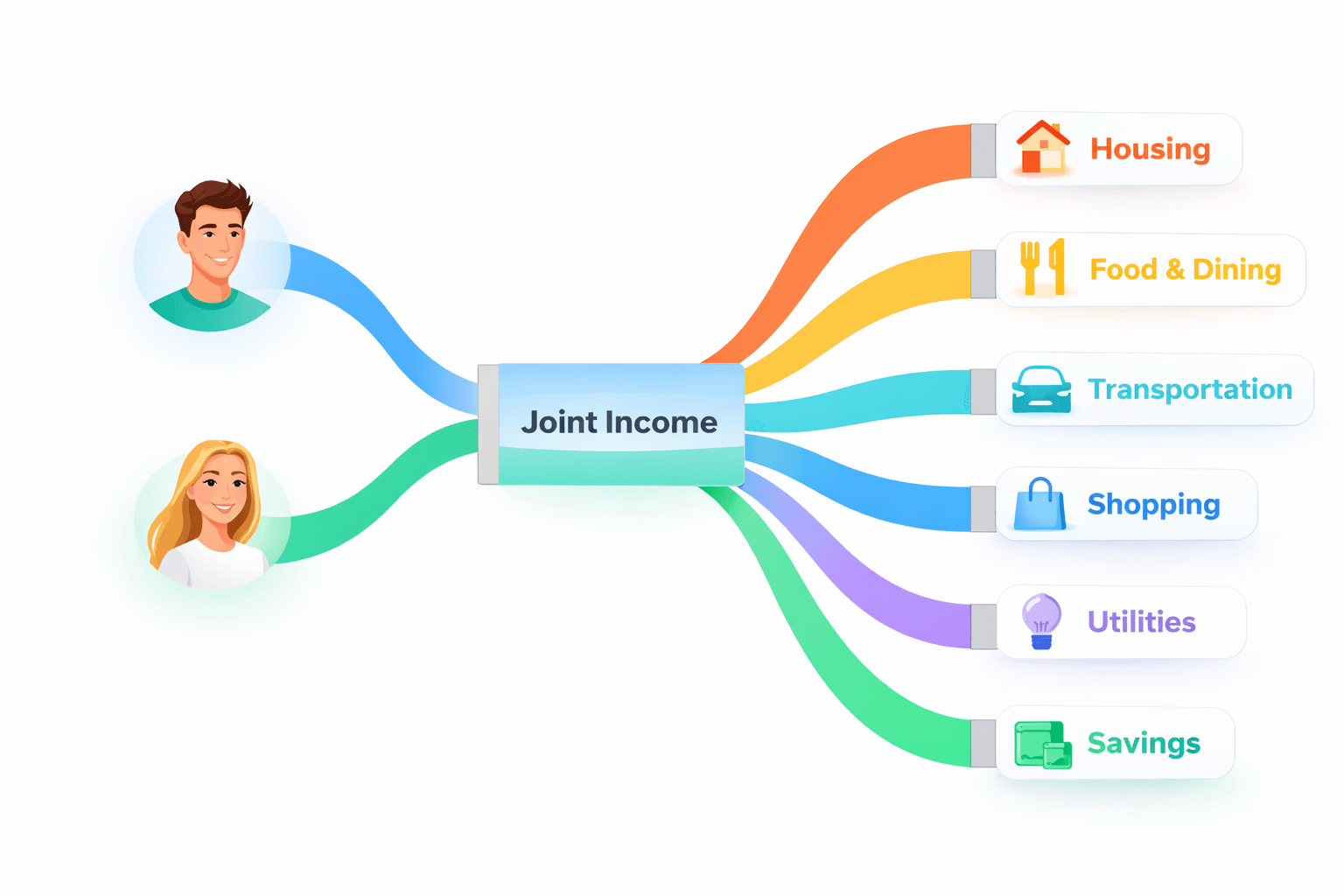
Safe to spend gets harder when income isn't predictable, but that doesn't mean the concept stops working. It means the math has to become more conservative. The goal is still the same: know what you can spend before the next bills create a problem.
For freelancers, commission earners, and tip-based workers, the trap is counting optimistic income too early. A safer method uses a baseline you can trust, not the best invoice that might arrive next week if everything goes right.
Start with a conservative baseline, not your best month
Use the lowest dependable recent pattern as your baseline for planning. That may be the smallest recent typical week, the portion of commissions that arrives reliably, or the minimum recurring client work you can count on.
This doesn't mean you have to live pessimistically forever. It means the spending decision shouldn't depend on money that's still uncertain.
Why the buffer matters more with uneven pay
A variable-income household needs a bigger shock absorber because the risk isn't just cost variability. The risk is timing variability too. A late client payment and a normal bill cluster can create the same pain as overspending.
That's why the buffer isn't optional here. It's the difference between a workable safe-to-spend method and a number that feels fine until one payment lands two days late.
What counts as 'safe' in this context
Safe doesn't mean 'all extra cash is open.' It means what can leave the account without depending on uncertain income to replace it before the next known bills land.
That's why the window matters. The question isn't what you might earn this month. The question is what's truly safe before the next reliable income event.
How to keep the method from turning into guesswork
Keep the bill window short, review it weekly, and separate confirmed income from hoped-for income. If money isn't deposited yet or not historically dependable, it shouldn't prop up the safe-to-spend number.
This approach feels stricter, but it usually reduces the emotional whiplash that comes from a number looking generous on Monday and impossible by Thursday.
A safer variable-income safe-to-spend method
- Use a dependable baseline income figure drawn from your lower-end normal weeks.
- Subtract bills due before the next reliable deposit, not every expense in the full month.
- Set a larger buffer than you would use with stable payroll.
- Promote uncertain money into the plan only after it actually lands.
Helpful next reads
Two variable-income examples with different risk levels
Example 1: Freelance with staggered invoices
A freelancer currently has $1,380 in checking, expects a $900 invoice in five days, but the reliable baseline is that client payments can slip a week. Bills due before the next already-landed deposit include rent of $950, software of $48, and groceries of $140. With a $200 buffer, there's almost no safe room until the invoice actually clears.
The conservative method prevents spending based on money that still exists only in email, not in the bank.
Example 2: Tips and commission with a strong floor
A server-sales household knows the worst recent week still produced about $1,050 take-home. Bills before the next predictable base-pay deposit total $620, and the household keeps a $180 floor. That leaves roughly $250 of real short-term flexibility, even if the weekend tips come in soft.
The number stays useful because it's built on the floor, not the hottest week.
Common mistakes with variable-income planning
- Treating expected invoices or likely commissions as guaranteed cash before they are actually deposited.
- Using the average of the best recent months instead of the lower-end pattern that's safer for short-term planning.
Pro tips for fewer surprise broke weeks
- Keep the safe-to-spend window tied to confirmed deposits, not to income you simply expect to arrive.
- If your pay is seasonal, use the weaker season as the planning baseline and treat stronger weeks as bonus room.
How Stitch helps when paydays aren't steady
Stitch helps variable-income households by keeping recurring bills, transaction review, and weekly cash flow in one place. That makes it easier to compare confirmed deposits against what's due before the next reliable income event.
Instead of trusting a too-optimistic summary, you can use Stitch to review what's due soon, verify how deposits are categorized, and plan from the actual timing window you are living in.
Frequently asked questions
Can safe to spend work with freelance or commission income?
Yes, but it needs a conservative baseline and a stronger buffer because the timing of income is less reliable than steady payroll.
Should I count invoices that are due soon?
For short-term spending decisions, it's safer to count the money after it lands rather than before, especially if clients have a history of paying late.
How big should the buffer be with variable income?
It should be larger than with stable payroll because it needs to absorb both bill variation and income timing variation.
Why does the number swing so much for variable income?
Because the inputs move more. Deposits arrive unevenly, bills stay fixed, and the short-term window can change sharply from week to week.
What's the safest baseline to use?
Use the lower-end dependable pattern from recent normal weeks, not the best recent week or a hoped-for month.
How does Stitch make this easier?
Stitch keeps due-soon recurring bills, categorized deposits, and cash flow together so you can plan from confirmed money and real timing instead of optimistic assumptions.