
Money explainer
Split bills 50/50 or by income? A practical guide
Two fair ways to share household costs, with simple formulas and real examples.
Stitch Money Editorial Team · Published March 5, 2026
Editorial policy and correction standards
- Compare 50/50 versus income-weighted with plain formulas
- Use real-life examples instead of vague fairness arguments
- Keep the split visible through a shared household workflow
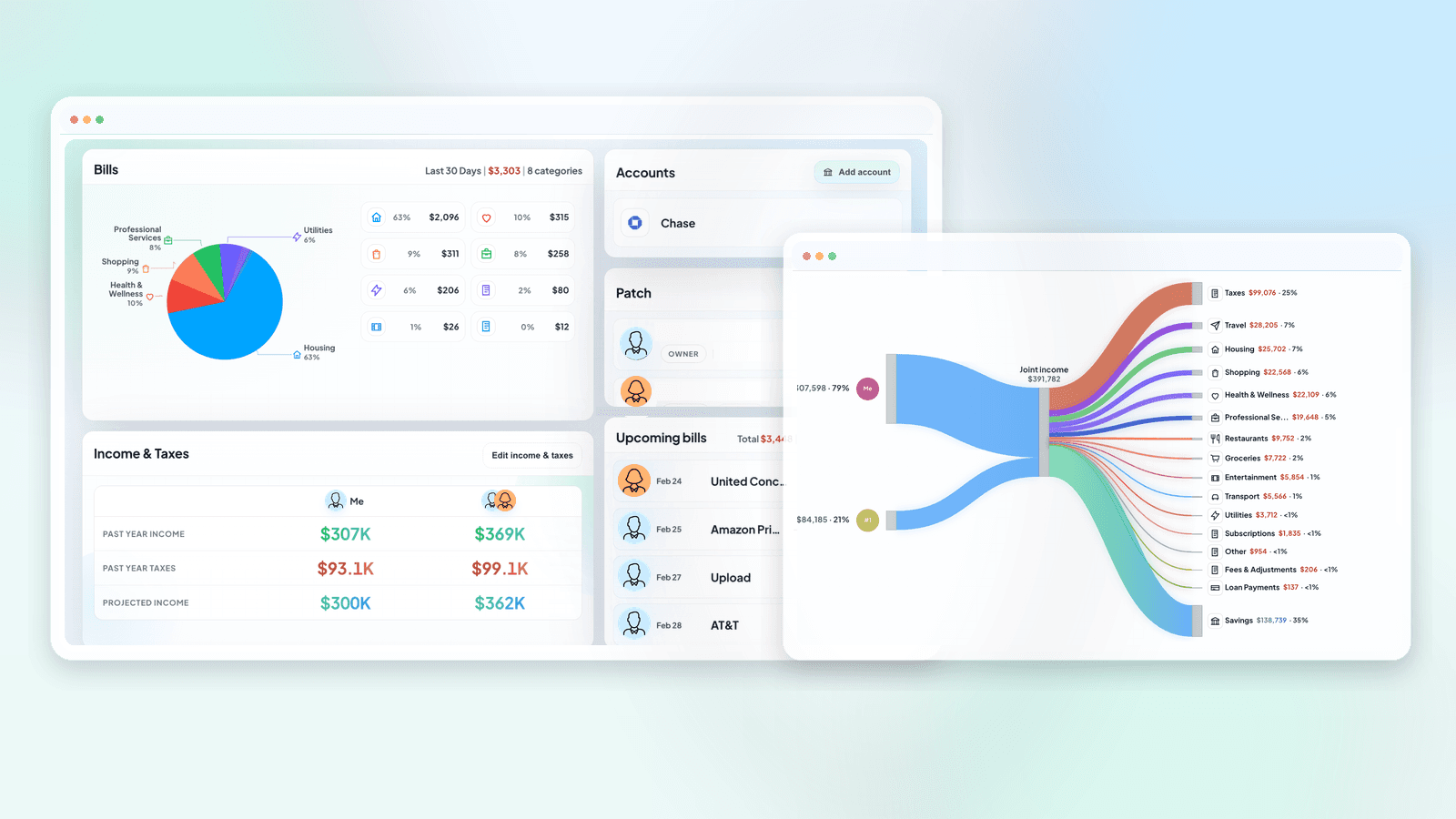
The debate between splitting bills 50/50 and splitting by income is really a debate about what kind of fairness matters most in your household. Equal percentages feel simple. Income-weighted contributions often feel more realistic when take-home pay is meaningfully different.
Neither method is automatically right. The better method is the one that covers shared costs cleanly, fits the real income picture, and stays visible enough that nobody has to guess how the split is working from month to month.
When 50/50 makes the most sense
A 50/50 split works best when incomes are reasonably similar, the shared bills are straightforward, and both people can absorb the monthly costs without one person feeling consistently squeezed.
It's attractive because it's simple. The simplicity itself can reduce friction if the numbers already support it comfortably.
When an income-weighted split is more practical
An income-weighted split often makes more sense when take-home pay differs meaningfully or when one person's fixed obligations leave much less flexible room. In that case, equal percentages can feel neat on paper but heavy in real life.
The point isn't to punish the higher earner. It's to match the shared load to the actual earning capacity in the household more honestly.
Why debt and outside obligations still matter
Gross income alone doesn't tell the whole fairness story. Two people can earn the same amount and still experience very different monthly pressure if one has heavier debt obligations, support commitments, or irregular expenses.
That's why a flat income-percentage rule can still need adjustment. Household fairness often depends on disposable reality, not just salary symmetry.
Keep the split visible, not implicit
The split works better when the bills, the shared view, and the recurring obligations stay visible in one place. That reduces the emotional load because the conversation is anchored in the actual bill set, not in vague impressions of who pays more.
Patch-style shared visibility helps because both people can see the same household picture before they debate the formula itself.
How to choose and maintain a split method
- List the real shared bills first so you are splitting a concrete number, not a vague feeling.
- Compare take-home income, not just gross salary headlines.
- Adjust for meaningful outside debt or obligations if they materially change disposable room.
- Review the split after raises, job changes, or major recurring bill changes instead of assuming the old formula stays fair forever.
Helpful next reads
Two real examples where 'fair' looks different
Example 1: Incomes of $80k and $40k
One partner earns about $80k and the other about $40k. Shared annual household costs total about $36,000. A pure 50/50 split would ask each person to cover $18,000, which takes a much bigger bite from the lower income. A 67/33 style split often fits the income reality more cleanly.
The income-weighted option can feel fairer because it reflects actual earning capacity instead of equal strain on unequal pay.
Example 2: Incomes of $120k and $120k, but uneven debt
Both partners earn the same salary, but one is paying $1,200 per month toward student debt while the other has no comparable obligation. A strict 50/50 split may still feel too blunt if the lower-flexibility partner is carrying much tighter monthly room.
Even equal income can call for a custom adjustment when disposable reality is uneven.
Common mistakes when splitting bills
- Treating 50/50 as automatically fair without checking whether the lower-flexibility person is being squeezed every month.
- Using income percentages without revisiting the formula after raises, debt changes, or major household cost shifts.
Pro tips for a lower-friction split
- Start with a method simple enough to explain in one sentence, then tweak only if the lived result keeps feeling off.
- Review the actual recurring bills together first so the discussion starts from the household reality, not from abstract fairness theory.
How Stitch helps households make the split easier to manage
Stitch helps by making the shared recurring bills, transaction review, and household cash-flow context easier to see in one place. That means the split conversation starts from the real bill load, not from rough memory.
With Patch, the shared view can support either a 50/50 model or an income-weighted one. The point isn't to force one formula. The point is to keep the household picture visible enough that the formula can be reviewed calmly when life changes.
Frequently asked questions
Is 50/50 always the fairest way to split bills?
No. It's the simplest, but not always the fairest if incomes or monthly flexibility differ meaningfully.
When should bills be split by income?
An income-weighted split is often more practical when take-home pay is materially different or when equal percentages create unequal strain.
What if incomes are equal but debt isn't?
Equal income can still support a custom adjustment if one person's monthly obligations leave much less disposable room.
Should we use gross pay or take-home pay?
Take-home pay is usually more useful because it reflects what actually reaches the household cash flow.
How often should we revisit the split?
Revisit it after major income or bill changes, and do a quick check periodically even if nothing dramatic has changed.
How does Stitch help with this?
Stitch makes the shared bill load visible in Patch so the split conversation starts from the actual recurring costs and weekly household picture.