
Money clarity
If you keep missing bills, it's usually one of these 7 reasons
Fix the system (not your willpower) with a better recurring workflow.
Stitch Money Editorial Team · Published March 11, 2026
Editorial policy and correction standards
- Find the root cause of missed bills quickly
- Use a recurring checklist to prevent repeats
- Fix account-source and timing blind spots first
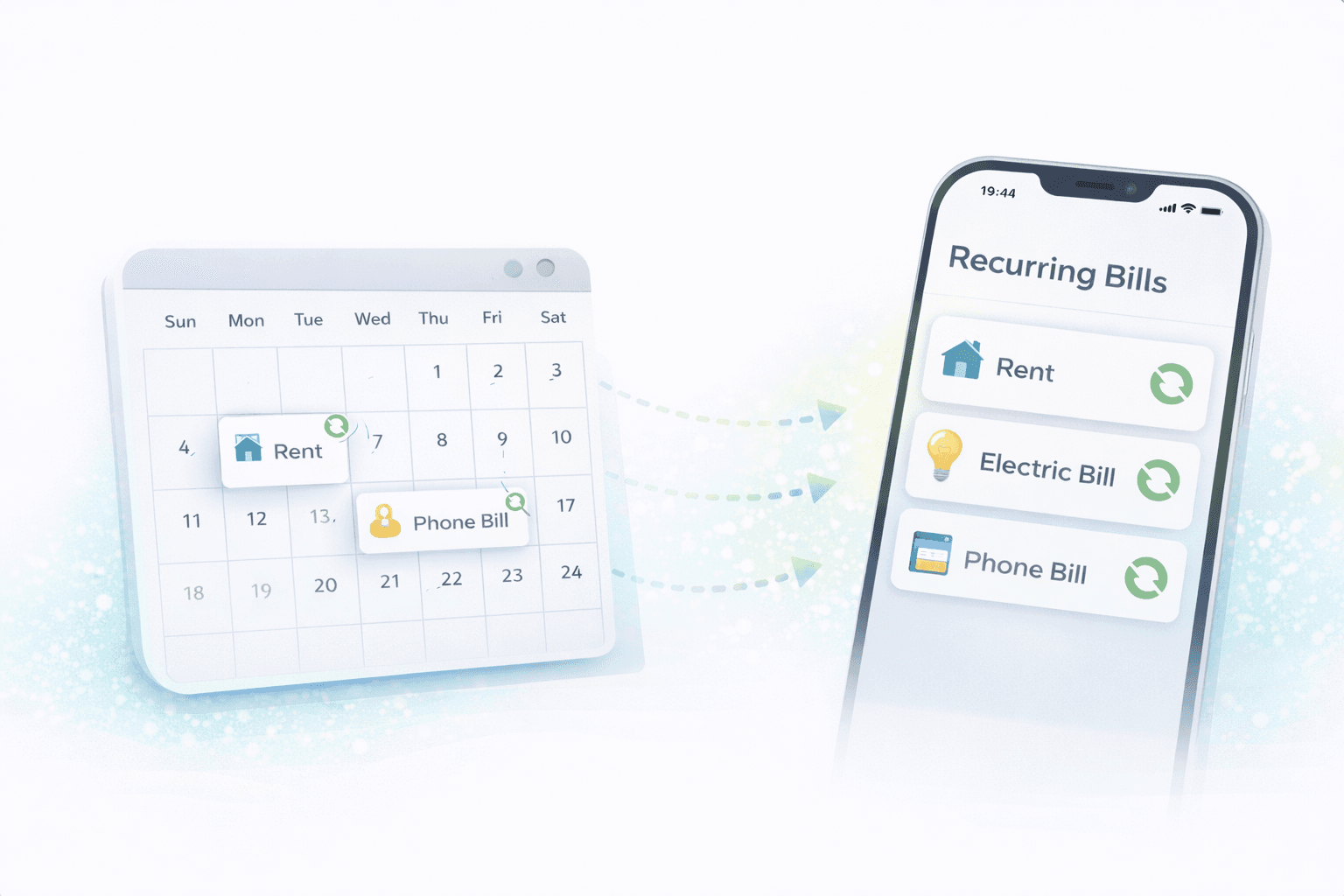
If bills keep getting missed, the issue is usually system design. Most people aren't forgetting everything; they are relying on fragmented reminders that break under real life.
The fix is to identify the specific failure pattern, then patch it with a recurring workflow. Once your due dates, account sources, and payday timing are visible in one place, late fees drop fast.
Reason 1-2: Incomplete bill list and no owner
Some bills are simply not tracked, especially annual renewals and irregular subscriptions. If it isn't listed, it can't be planned.
Another frequent issue is no clear owner. Shared households often assume someone else handled the payment.
Reason 3-4: Wrong account assumptions and stale autopay
People remember the due date but forget which account funds the draft. The right amount in the wrong account still leads to failure.
Autopay settings also drift after card changes or account closures. A stale autopay feels safe until it fails silently.
Reason 5-6: Payday mismatch and notification fatigue
Bills due before income arrives create avoidable misses when no buffer exists. This is timing risk, not character.
Too many reminders can also backfire. Generic alerts become noise and urgent bills blend in with trivial ones.
Reason 7: No weekly review loop
A monthly check catches problems late. Weekly recurring review catches them before draft day, when action is still possible.
Even a five-minute review can prevent most repeat misses.
Quick fixes that work this week
Start with high-consequence bills first: housing, insurance, utilities, debt minimums. Confirm due date, account source, and autopay status.
Then map the next 10 days against payday and protect a minimum cash floor.
Missed-bill recovery checklist
- Audit every recurring bill and add missing annual or quarterly items.
- Assign payment owner and account source for each bill.
- Verify autopay method and fallback account still work.
- Run a weekly due-date check before the next paycheck window.
Helpful next reads
Two households fixing repeated misses
Example 1: Missed phone and insurance drafts
A household missed a $145 insurance payment and a $98 phone bill in one month. Root cause: both drafts moved to a rarely used checking account. They corrected account source tracking and added a weekly recurring review.
No further misses in the next two billing cycles.
Example 2: Autopay card expired silently
A streaming bundle and gym membership failed after a card expired, triggering two late notices. They added a quarterly autopay verification step and grouped critical recurring bills into high-risk reminders.
Failures were caught before penalties in the following quarter.
Common mistakes
- Blaming memory while leaving due-date and account-source workflows unchanged.
- Relying on monthly cleanups instead of catching issues in weekly windows.
Pro tips
- Keep high-risk bills in a separate "must-clear" list reviewed before each payday.
- When adding a new bill, immediately record due date, owner, account source, and fallback plan.
How Stitch helps stop repeat missed bills
Stitch centralizes recurring visibility, upcoming due dates, and transaction confirmation so missed bills are diagnosed quickly. Recurring plus Transactions closes the gap between reminders and what actually posted.
For shared households, Patch clarifies who should act and when. Spending and cash-flow context help you protect priority bills during tight windows.
Frequently asked questions
Why do I keep missing bills even with reminders?
Reminders alone fail when bill ownership, account source, or payday timing is unclear.
What's the first fix I should make?
Build a complete recurring list with due date and account source for each high-risk bill.
How often should I review bills?
Weekly checks are usually enough to catch issues before due dates.
Can autopay still miss bills?
Yes. Expired cards, changed accounts, or draft failures can break autopay unexpectedly.
What if my income timing is inconsistent?
Use a larger buffer and prioritize pre-payday high-risk bills first.
How can Stitch help immediately?
Start with the Recurring upcoming list and verify each item in Transactions to confirm drafts are behaving as expected.