
Money clarity
Why you feel broke before payday (even with a good income)
It's usually timing, not budgeting. Here's how to see it clearly.
Stitch Money Editorial Team · Published March 11, 2026
Editorial policy and correction standards
- Most payday stress comes from timing clusters, not personal failure
- A short payday window check reveals the real squeeze
- Upcoming recurring visibility beats guesswork every week
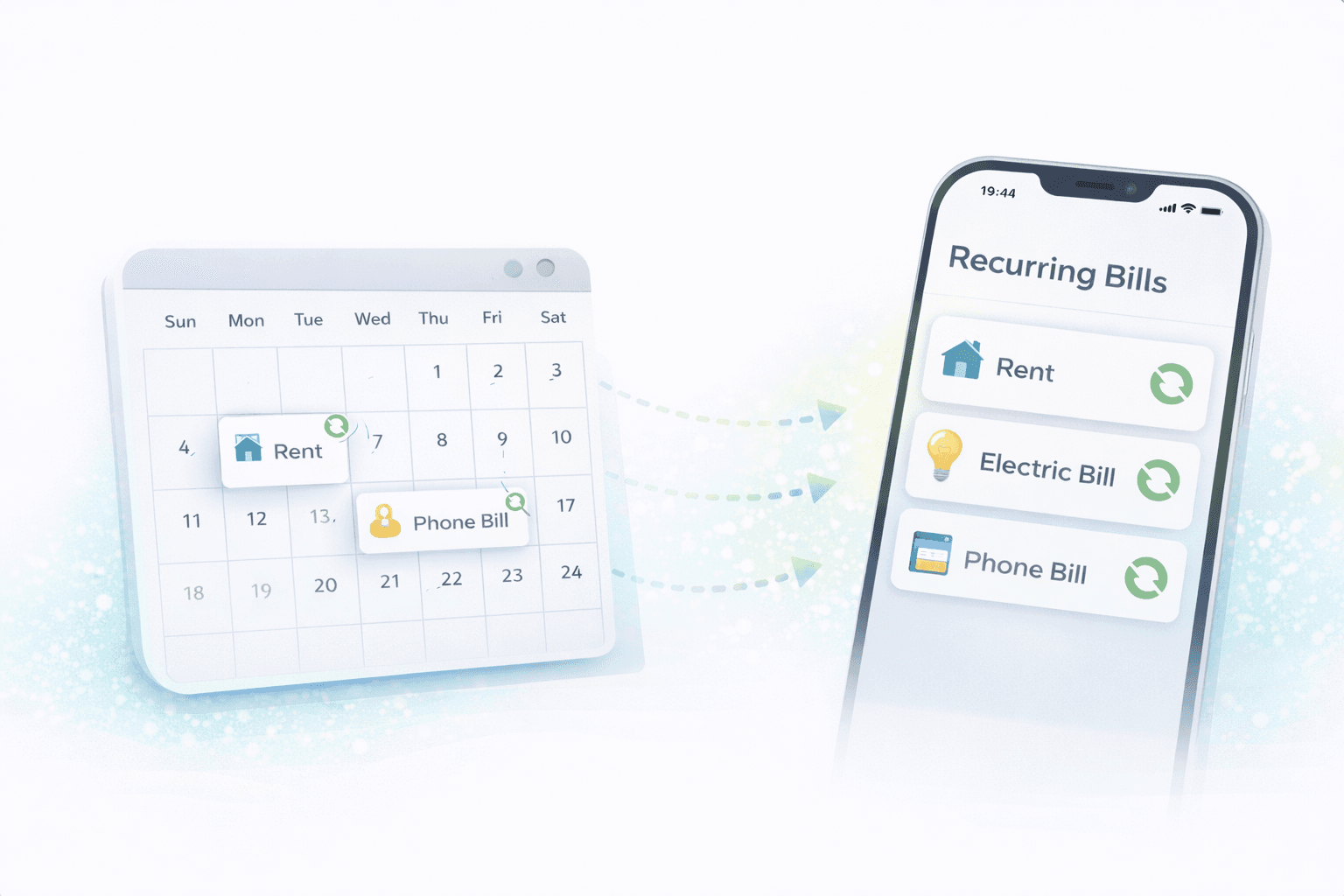
Feeling broke before payday can happen even when your salary is objectively solid. The usual problem is timing. Bills draft in clumps, paychecks land later, and your checking balance becomes a misleading signal.
Most people reading this want one thing: relief from that weekly panic. The fix is to map obligations to the next paycheck window instead of treating the month like one smooth pool of cash.
Timing beats totals
Monthly totals hide weekly bottlenecks. If rent, insurance, and a card payment all hit in six days, your month can still be technically affordable while feeling impossible in real life.
A payday window view forces the right question: what must clear before income arrives again.
The three clusters that create false 'I'm broke' moments
Fixed bill cluster: housing, utilities, and insurance draft close together. Variable cluster: groceries and transport spike in the same week. Transfer cluster: planned savings and debt transfers fire before expected income.
Any two of these can create a temporary crunch that feels like failure but is mostly sequencing.
Use Payday in X days as a decision frame
Treat "Payday in 8 days" as your planning horizon. Subtract what's due in that window and preserve a buffer. The remainder is your practical spend limit right now.
This mental model reduces impulse decisions based on headline balance.
How to reduce stress in the next cycle
Move one or two discretionary purchases after payday when possible. If a fixed bill can be shifted with the provider, prioritize the bill that usually causes overdraft risk.
Build a tiny recurring cushion over time so one variable bill swing doesn't trigger panic.
What to do when it still feels wrong
If the math looks impossible, inspect transaction classification first. Transfers counted as spending or missing paycheck detection can make the picture look worse than reality.
Once data is clean, you can decide whether the issue is timing, amount, or both.
5-minute pre-payday reset
- Note days until next paycheck and treat that as the planning window.
- List recurring charges due in that exact period.
- Protect a buffer floor before discretionary spending.
- Move one optional purchase if the window is tight.
Helpful next reads
Two paycheck windows that feel "broke" for different reasons
Example 1: Good income, bad sequencing
Take-home is $6,200 monthly, but in the next 7 days rent $1,980, car insurance $180, and a card payment $420 all draft before payday. Available checking after essentials is only $210.
Stress is real, but it's a sequencing issue that can be planned around.
Example 2: Variable week plus fixed bills
Freelance income expected is $1,300 this week, but only $700 has cleared. Utilities $155 and daycare $410 are due before the next deposit. Without a conservative assumption, spending feels safe until it suddenly isn't.
Using cleared income and upcoming bills prevents surprise shortfalls.
Common mistakes
- Treating monthly average income as spendable today without checking the next payday gap.
- Ignoring recurring due dates until bills are within 24 hours of drafting.
Pro tips
- Keep a separate note called "before-next-payday bills" and refresh it weekly.
- When cash is tight, postpone categories with flexible timing before touching essentials.
How Stitch helps with pre-payday stress
Stitch surfaces upcoming recurring drafts and transaction timing so you can plan by window, not by monthly guesswork. Recurring and Transactions expose what's due and what already cleared.
Spending trends and Income & Taxes context help you make realistic tradeoffs. For households, Patch keeps both people aligned on what must be protected before the next paycheck lands.
Frequently asked questions
Can I feel broke before payday even with a high income?
Yes. Timing clusters can create short-term cash squeezes regardless of monthly income level.
What number should I trust before payday?
Use the amount left after subtracting bills due before the next paycheck and preserving a buffer floor.
How many days ahead should I plan?
Most people get strong results planning 7 to 10 days ahead.
Is this a budgeting failure?
Often no. It's usually a timing mismatch between income arrival and bill drafts.
What if my paycheck dates vary?
Use conservative expected income and keep a larger buffer to absorb late deposits.
How can Stitch help immediately?
Start by reviewing Recurring due dates and recent Transactions, then make one adjustment before the next cluster.